At 60, Star Trek: Strange New Worlds Is Testing Its Biggest Fans
As Star Trek celebrates 60 years, Strange New Worlds is getting weirder, darker and more divisive than ever. But if puppets, horror, camp and bad episodes are enough to make you quit Trek now, you may have forgotten what this franchise has always been.
On Sept. 8, 2026, Star Trek turns 60.
That seems like a pretty good time for a family meeting.
I love Star Trek.
I don’t mean I enjoy a few of the movies and know what a Vulcan salute is. I mean I love this ridiculous franchise enough that I will defend its honor right up until it actually does something bad enough to make me stop loving it.
That can happen.
Right, Star Wars?
So consider this a love letter to Star Trek. It is also a plea to Paramount, a complaint to the people currently writing Strange New Worlds, and a message to a certain corner of the fandom that has somehow spent 60 years watching Star Trek without noticing what Star Trek is actually about.
Starfleet Academy Never Got a Fair Shot
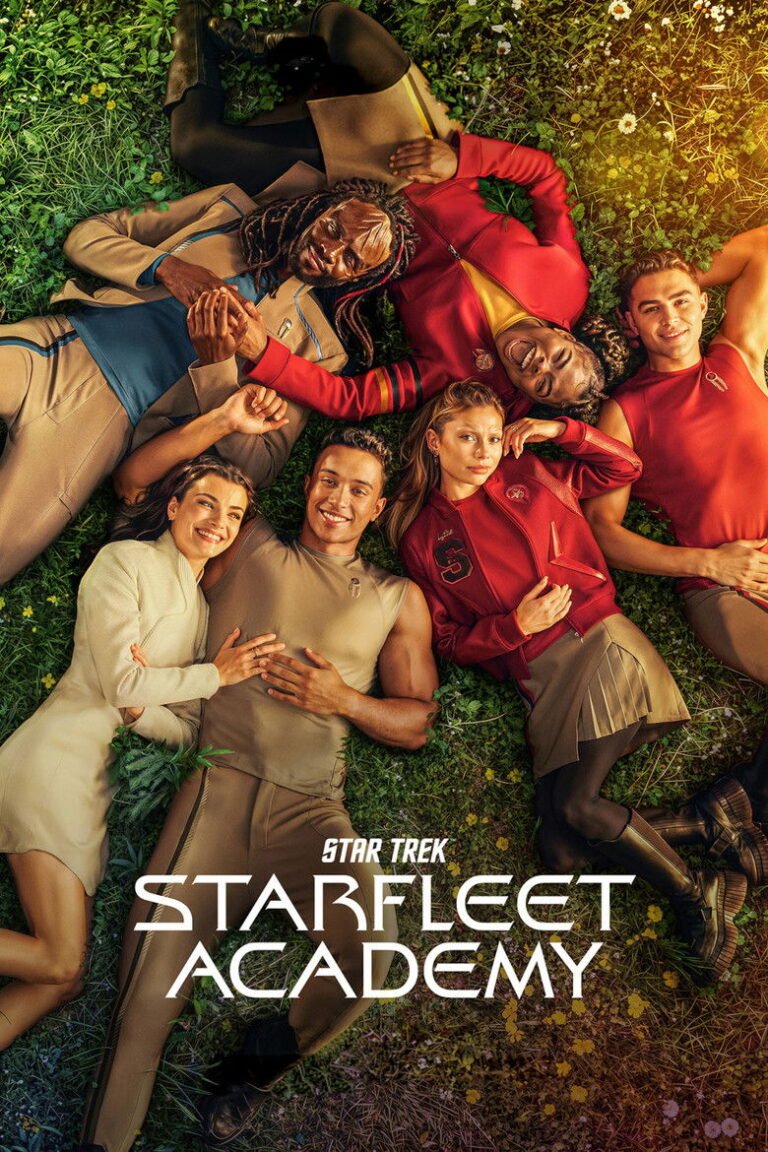
Let’s start with Star Trek: Starfleet Academy, because I don’t think it ever got a fair shot.
That does not mean everybody who disliked the show was wrong.
Its young-adult side didn’t work for everyone. Some critics specifically called out the cadet relationships and YA material as its weakest elements. More importantly, the show had an actual audience problem. It failed to reach Nielsen’s weekly Top 10 streaming chart during its first season, and Paramount+ has already announced that the previously ordered second season will be its last.
Those are legitimate criticisms and legitimate business problems.
But critics generally liked the show. It currently sits at 84 percent on Rotten Tomatoes, compared with a 52 percent audience score.
And the audience conversation was poisoned almost immediately.
The day after the two-episode premiere, ComicBook.com reported that 38.2 percent of nearly 3,000 IMDb ratings were a 1 out of 10, while Rotten Tomatoes showed a massive critic-audience split. You can debate whether every one-star rating constitutes review bombing, but the scale of the immediate pile-on was impossible to ignore.
Now, months later, something interesting is happening.
On Sept. 6, the main Starfleet Academy listing on JustWatch’s U.S. daily chart moved up 67 places to No. 532. Its separate Season 1 listing moved 485 places in one day to No. 856. JustWatch calculates those charts using actions such as streaming-offer clicks, watchlist additions and users marking titles as seen.
Let’s not turn that into something it isn’t.
No, Starfleet Academy has not suddenly become America’s biggest television show.
But that is a measurable pulse of renewed interest in a series the internet had already buried.
People are still finding it.
I think they deserved the chance to do that before the entire conversation surrounding the show became a referendum on whether Star Trek had suddenly become “too woke.”
Yes, Star Trek Is Woke. It Always Was.
I cannot believe we’re still having this conversation.
The official theme of Star Trek’s 60th anniversary is “Space for Everybody.”
Those are Paramount’s words, not mine.
StarTrek.com describes the anniversary as celebrating a future of hope, exploration and boldness, with “Space for Everybody” as its invitation to fans.
That isn’t some new direction invented for modern television.
It is the inheritance.
When the original Star Trek premiered on Sept. 8, 1966, the Enterprise bridge included an African American woman communications officer, an Asian American helmsman and a half-human, half-Vulcan science officer. A Russian ensign later joined them at the height of the Cold War. NASA itself cites diversity and inclusion among the themes that connected Star Trek to the real-world space program.
Then Nichelle Nichols took that influence beyond television.
NASA recruited Nichols during the development of the Space Shuttle program to help encourage women and minorities to apply to the astronaut corps. NASA says her campaign inspired hundreds of applications. When the agency announced its class of 35 new astronauts in January 1978, it included women and minorities for the first time.
So you can dislike Starfleet Academy.
Please do.
Tell me the dialogue doesn’t work. Tell me a character annoys you. Tell me the school setting doesn’t feel like Star Trek. Tell me the young-adult tone isn’t what you wanted.
Those are opinions about a television show.
But Jay-Den Kraag being gay is not bad writing.
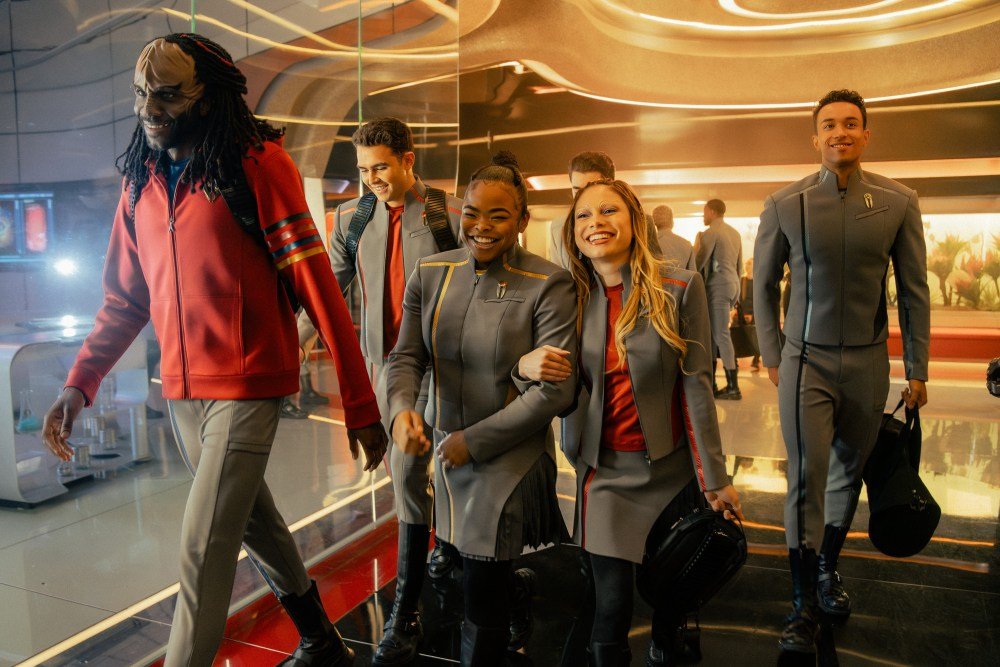
Karim Diané plays the first openly gay Klingon in Star Trek.
If you think Jay-Den is badly written, tell me why.
If you think his story doesn’t work, tell me why.
But if the thing you cannot tolerate is simply that there is a gay Klingon on your television, stop wrapping that complaint in three hours of canon analysis.
The canon isn’t your problem.
The gay Klingon is.
Say what you mean.
That’s not criticism. That’s bigotry.
Bad Star Trek Is Part of Star Trek
And this is where I really start losing patience.
People talk about old Star Trek like every episode was “The Inner Light.”
Have you watched Star Trek?
Bad Star Trek is practically a cherished family tradition.
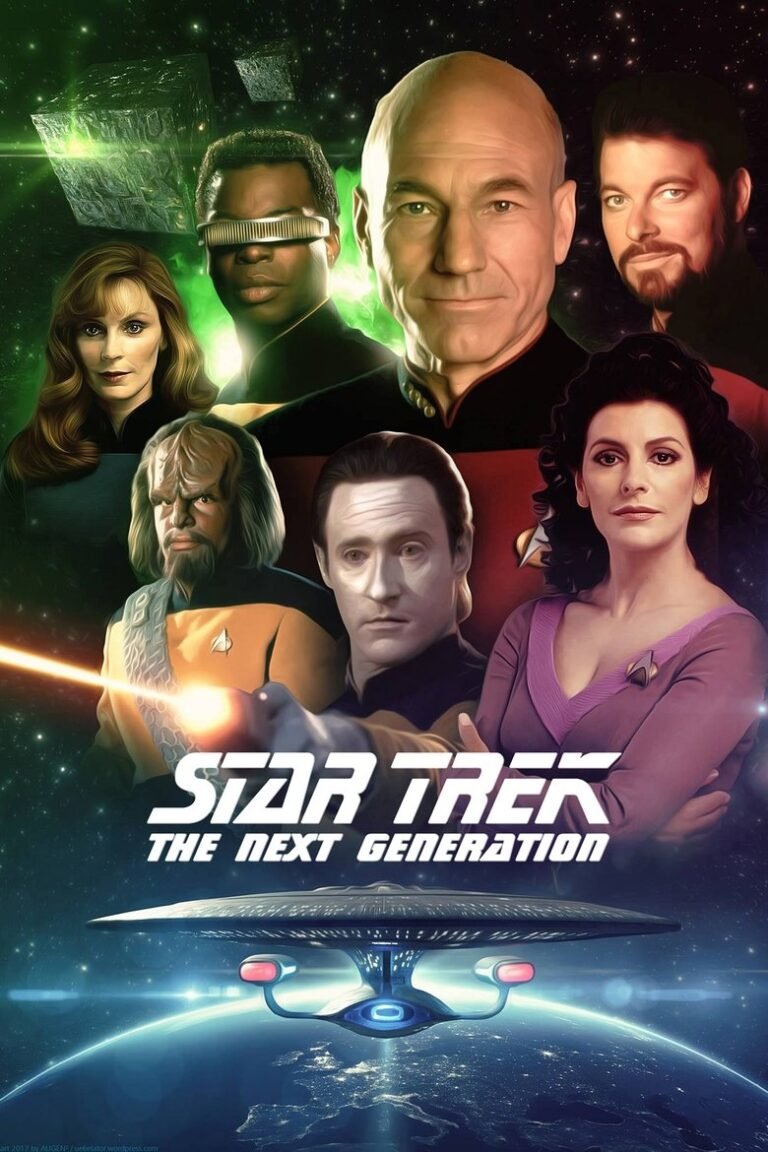
TNG gave us “Code of Honor,” an episode Brent Spiner later said the cast all hated, describing it as “accidentally racist.”
Deep Space Nine gave us Ferengi episodes, Grand Nagus nonsense and “Move Along Home,” the one where members of the senior staff basically get trapped inside an alien board game and have to do intergalactic hopscotch. Even StarTrek.com lovingly calls it one of the series’ goofiest episodes.
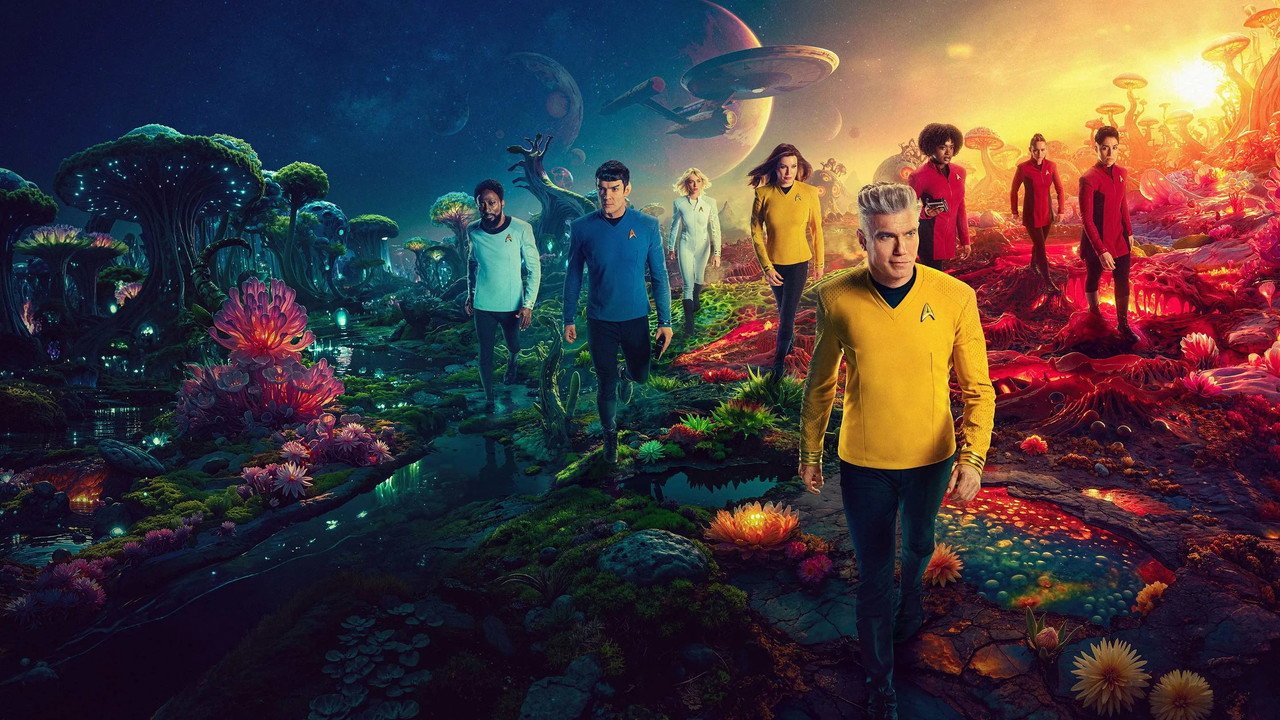
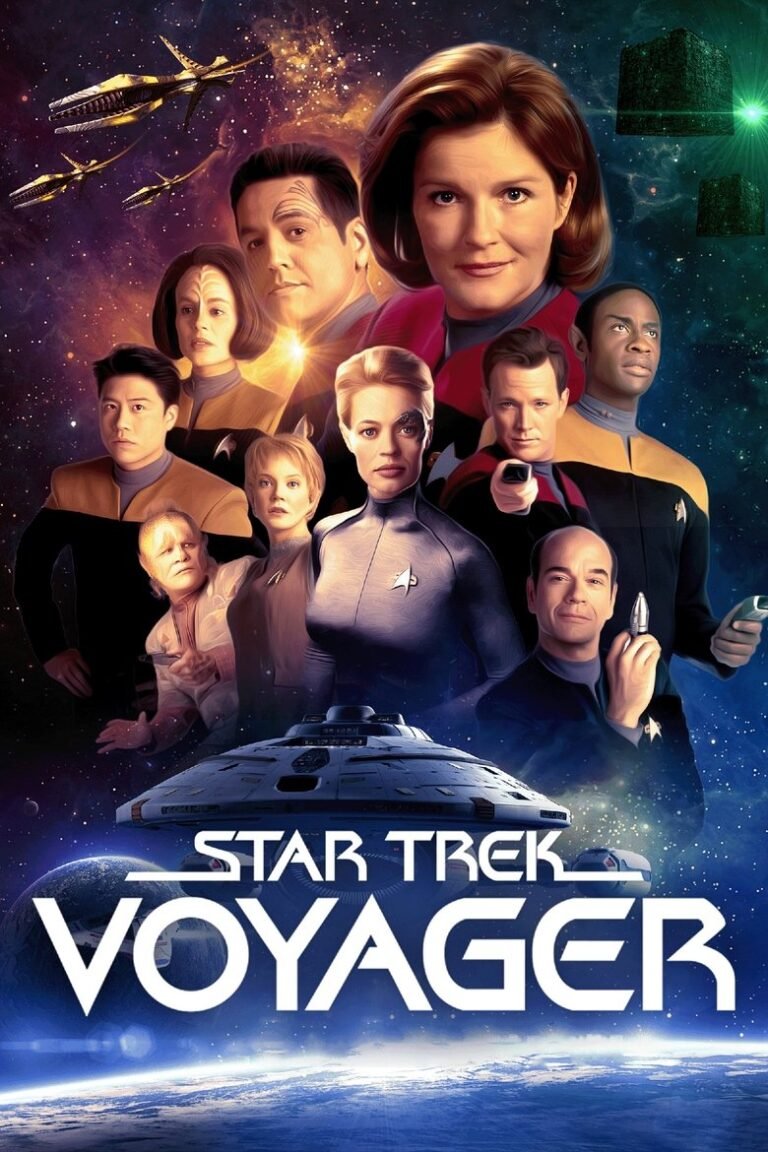
Voyager gave us holodeck adventures, Captain Proton, a holographic Doctor who sings opera and, of course, “Threshold.”
Tom Paris and Captain Janeway turn into salamander creatures.
They have salamander babies.
The crew rescues them.
The babies stay behind.
Credit: TMDB / promotional artwork
Promotional artwork
themoviedb.org
Everybody goes back to work.
StarTrek.com’s own retrospective calls the episode infamous and notes that nobody even references the event again until Lower Decks.
Imagine doing that in a ten-episode season today.
The internet would need medical attention.
Then there is the Mirror Universe.
Evil versions of everybody. Leather. Murder. Seduction. Mirror Spock and the most important goatee in science-fiction history.
And people are telling me puppets have finally made Star Trek too ridiculous?
Come on.
Star Trek did not survive for 60 years because every episode was brilliant.
It survived because sometimes it made “The Inner Light.”
Sometimes it made “Threshold.”
And somehow both became part of this enormous, ridiculous thing we love.
Bad episodes are part of Star Trek.
That doesn’t mean we have to pretend they’re good.
It means surviving one is practically part of the membership fee.
Strange New Worlds, I Am Trying to Help You Here
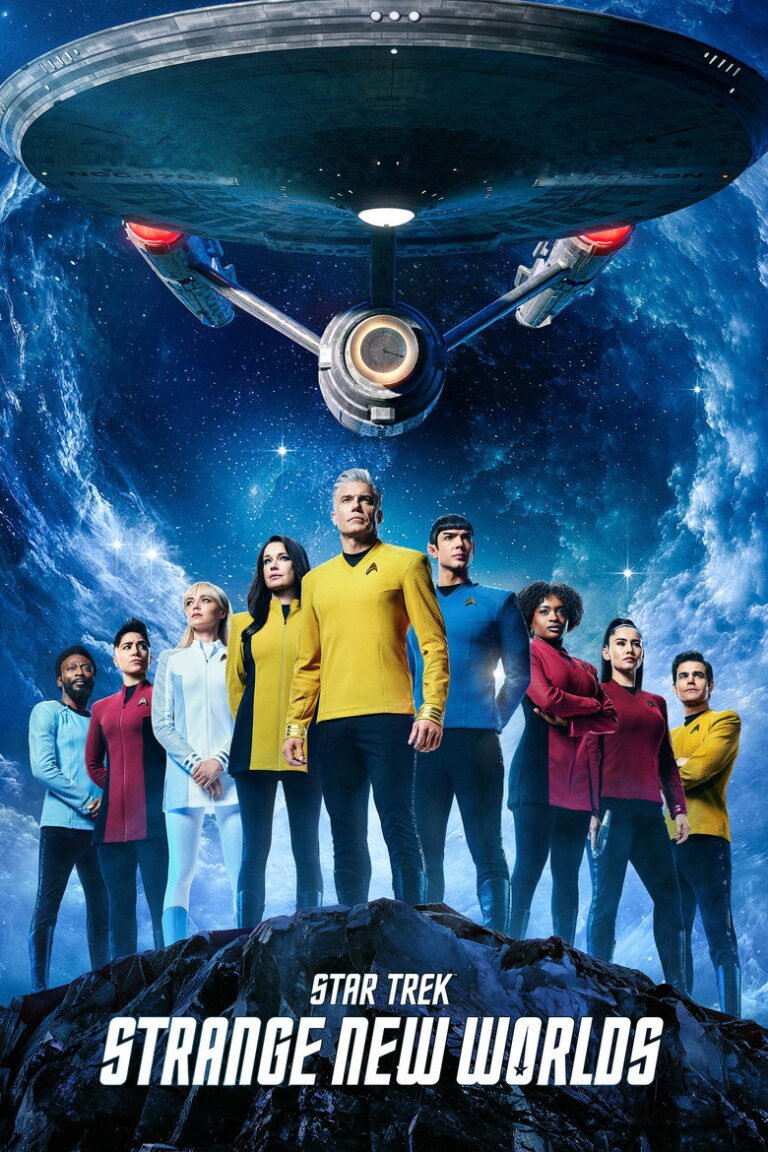
Which brings me to Star Trek: Strange New Worlds.
Because I am out here fighting the good fight.
I’m telling people modern Star Trek is still Star Trek.
I’m telling people experimentation has always been part of this franchise.
I’m telling people that the haters are exaggerating.
And apparently the writers of Strange New Worlds have decided to make me look like an asshole.
Season 4 started with “Valles Marineris,” which sends Pike and the Enterprise 65 million years into the past.
Dinosaurs! I loved it. It was one of the best Trek episodes I’ve seen in a long time.
Then came “The Griffin Incident.”
What happened here?
It is one of the darkest, strangest hours of Star Trek I can remember.
And somewhere in the middle of trying to process all of this, I found myself asking a question I never expected to ask:
Why did Spock cut his ears off?
Then Strange New Worlds went black and white.
Then a transporter accident turned almost the entire crew into puppets.
Actual puppets.
Jim Henson’s Creature Shop created custom puppet versions of the Enterprise crew for “Level-Five Transporter Accident.” Paramount even released a behind-the-scenes feature showing how the Creature Shop matched the characters and actors.
Then, on Sept. 3, Trelane trapped the Enterprise crew inside a soap opera.
Paramount’s own Season 4 episode guide confirms this completely absurd run: dinosaurs, “The Griffin Incident,” “A Case of Chiaroscuro,” puppets, and then “Like Chronitons Through the Hourglass,” in which a space trickster traps the crew in a soap opera.
This may be the gimmickiest season of Star Trek ever made.
And I don’t appreciate it.
Because every week I am defending Star Trek from somebody declaring that the franchise has finally lost its mind, and Strange New Worlds keeps handing them screenshots.
Guys.
I’m trying to help you here.
Then My Wife Ruined My Argument
Thankfully, my wife Jackie is smarter than me.
While I was complaining about all this, she pointed out something embarrassingly obvious.
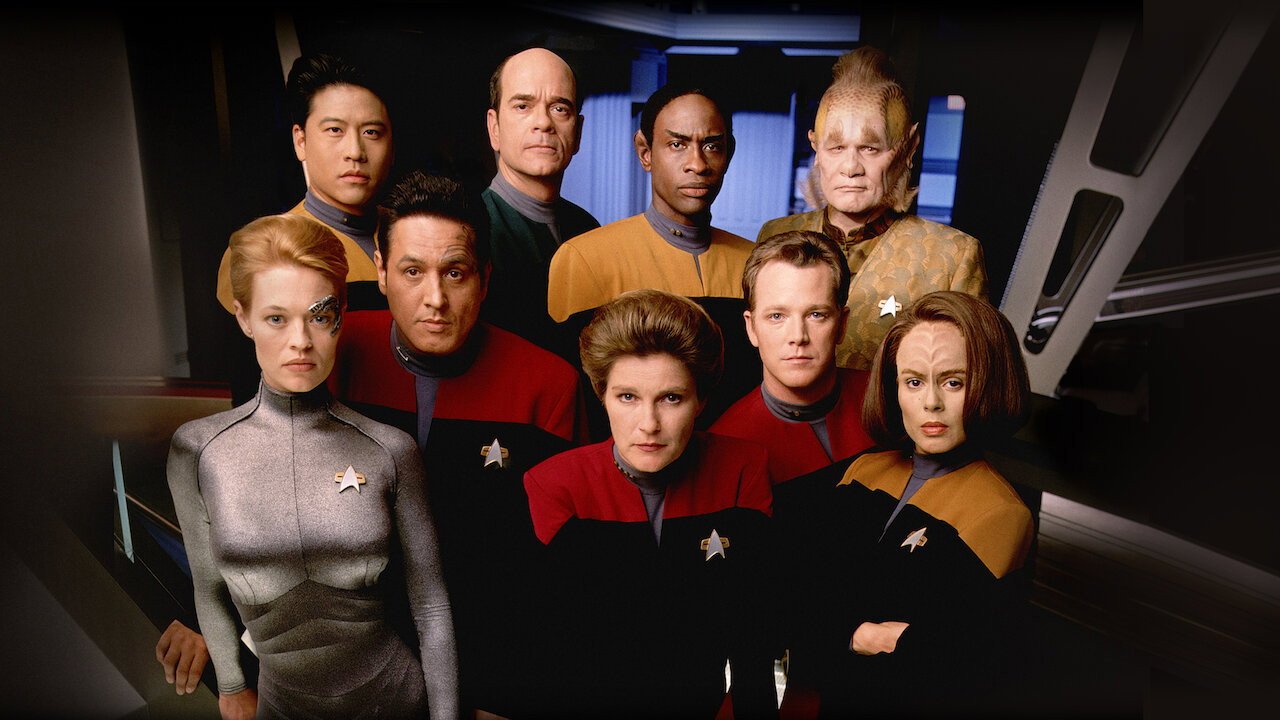
They’re preparing you for The Original Series.
Oh.
Right.
The campiest Star Trek of them all.
Fuzzy Tribbles.
Mirror Spock’s evil goatee.
Tiny uniforms.
Green Orion women.
Gangster planets.
Godlike aliens.
Technicolor lighting.
Sets that proudly looked like sets.
Klingon makeup that has aged badly enough that we can probably agree to leave some things in 1966.
Credit: TMDB / promotional artwork
Promotional artwork
themoviedb.org
This is where Strange New Worlds is going.
And suddenly the puppets make a little more sense.
Maybe Strange New Worlds isn’t drifting away from Star Trek by getting weird.
Maybe it’s becoming more recognizably Star Trek as it gets closer to Kirk.
That doesn’t mean every experiment works.
It doesn’t mean I have to love the puppet episode.
It doesn’t mean I’m forbidden from asking what the writers were thinking.
You can love Star Trek and think an episode is terrible.
Those ideas have coexisted peacefully for six decades.
Star Trek Used to Have Room to Fail
Older Star Trek had something streaming television rarely gives shows anymore.
Room to fail.
When you’re making more than 20 episodes a season, sometimes you make “The Best of Both Worlds.”
Sometimes you make “Code of Honor.”
Sometimes Captain Picard lives an entire lifetime on another planet.
Sometimes Dr. Crusher falls in love with a ghost.
You swing.
Some swings become classics.
Some become jokes fans tell each other for the next 30 years.
Modern seasons are shorter, which makes a bad episode hurt more. That is a legitimate complaint about Strange New Worlds.
When you’ve only got ten episodes, spending one on an experiment that doesn’t work feels expensive.
But demanding that Star Trek stop experimenting because one of those experiments might fail?
That’s asking Star Trek to stop being Star Trek.
I don’t want safe Trek.
I want writers willing to make something that could become the next “Inner Light” or the next salamander-babies episode.
I simply reserve the right to make fun of the salamander babies.
And Eventually We Have to Get to Pike
This is where all the silliness starts making me nervous.
Because we know where Christopher Pike is going.
We’ve known for 60 years.
Pike eventually suffers catastrophic radiation injuries and is left severely disabled, communicating through the famous chair and its blinking light.
Discovery made that fate substantially more painful by having Pike see it coming.
On Boreth, Pike is shown the future that awaits him if he takes the time crystal. He takes it anyway. Strange New Worlds later revisited that choice and reinforced that avoiding his destiny could have disastrous consequences for Spock and the Federation.
So Pike knows.
We know.
And the clock is ticking.
Paramount has already announced that Strange New Worlds will end with a fifth and final season consisting of six episodes.
I don’t know whether the series will actually show Pike’s accident.
Nobody has promised us that.
But the show cannot escape his destination either.
Every step toward Kirk’s Enterprise makes that shadow bigger.
And then there are La’An Noonien-Singh and Erica Ortegas.
They make me nervous.
Pike, Spock, Uhura, Chapel, M’Benga and the growing collection of characters around them have established places in Star Trek history.
La’An and Ortegas were created as new characters for Strange New Worlds. StarTrek.com explicitly identified them that way before the series premiered.
That does not mean they are going to die.
Transfer them.
Promote them.
Send them to Risa.
Put Ortegas behind a desk for 40 years.
Please.
But when you’re watching a prequel and almost everybody has an appointment with canon except two characters you’ve spent years learning to love, you start getting nervous.
Especially when there are only six episodes waiting at the end.
And Can We Appreciate That They Actually Build This Stuff?
One more complaint about the complaints.
Strange New Worlds looks fantastic.
Yes, the series uses modern virtual-production technology. It also combines that technology with built environments and physical production design rather than simply putting everyone in an empty green room and hoping visual effects can rescue it later.
Unknown – verify at original source
variety.com
The American Society of Cinematographers documented how the show combines its LED volume with standing ship sets and physical production design, including engineering, the mess hall and cargo areas.
Then, when the writers decided the crew should become puppets, they brought in Jim Henson’s Creature Shop to make custom puppets.
You don’t have to like the episode.
But appreciate the effort.
This is a Star Trek series willing to build things, try things and occasionally embarrass itself trying something nobody asked for.
You know what?
That’s pretty Trek.
Stop Letting the Comments Section Become the Audience
Which gets us back to Starfleet Academy.
At what point did studios start giving this much weight to what people say in YouTube comments?
Comments are fun.
I read them.
Sometimes I respond.
Sometimes somebody calls me an idiot and makes a surprisingly compelling argument.
But a comments section is not a focus group.
An angry thumbnail isn’t Nielsen.
Someone whose entire business model depends on convincing an audience that another beloved franchise has been DESTROYED has a financial incentive to keep everybody angry.
And I want to make one distinction very clear.
I am not saying Paramount canceled Starfleet Academy because internet trolls complained about it.
There is no evidence for that.
The show failed to reach Nielsen’s streaming Top 10 during Season 1. Paramount had a business decision to make.
What I’m saying is that studios, fans and entertainment media should all be very careful about confusing outrage with consensus.
Outrage is a product now.
People make money convincing you that somebody stole the thing you love.
They ruined your superhero.
They destroyed your galaxy.
They made Star Trek woke.
They put a gay Klingon on television.
Sorry.
You lost me on that last one.
Space for Everybody Means Everybody
Here’s where I land after 60 years of Star Trek, four increasingly bizarre seasons of Strange New Worlds, one prematurely dismissed Starfleet Academy, salamander babies, singing holograms, Ferengi nonsense, Mirror Universe goatees and more transporter accidents than any responsible regulatory agency should allow.
I don’t want Star Trek protected from change.
I want Star Trek protected from cowardice.
Keep it inclusive.
Keep it optimistic.
Keep letting weird people onto the bridge.
Keep making episodes that might fail.
Keep building beautiful sets.
Keep giving me characters I care about.
Keep respecting canon enough that changing it actually means something.
And writers? Come on, guys. I’m out here defending you.
Stop making me look stupid.
To the people screaming that Star Trek is suddenly too woke, I don’t know what show you’ve been watching.
To the people who think criticizing an episode automatically makes somebody a hater, it doesn’t.
I can defend a gay Klingon’s right to exist and still ask why Spock cut his ears off.
That’s fandom.
Not unconditional approval.
Love.
I love Star Trek.
I’ll defend its honor until Star Trek gives me a real reason not to.
I’ve already watched another enormous space franchise demonstrate that decades of goodwill can eventually run out.
Please don’t test that theory.
Happy 60th birthday, Star Trek.
Paramount, writers, fandom, trolls, everybody:
Please don’t screw this up.
One beep for yes.
References
Sources & References
9
Links cited, consulted, or used as background for this article. Inclusion does not imply independent verification of every claim.
-
startrek.com
Star Trek Boldly Goes into its 60th Year with Fan-Centric Anniversary Celebrations Throughout 2026
September 8, 2025 -
paramountplus.com
Star Trek Turns 60: Everything You Need To Know – Sneak Peak
3 weeks ago -
startrek.com
Star Trek Boldly Celebrates 60 Years: Everything You Need To Know for September 8
1 week ago -
paramountplus.com
Star Trek Day 2026: When It Is And How To Celebrate – Sneak Peak
3 weeks ago -
trekmovie.com
Star Trek 60th To Be Celebrated With TV Specials, Global Events, On The ISS, And More – TrekMovie.com
2 weeks ago -
cbr.com
Star Trek: Starfleet Academy Fails to Make Nielsen's Top 10 Streaming List
February 20, 2026 -
trekmovie.com
Second Week Of ‘Star Trek: Starfleet Academy’ Didn’t Crack Nielsen Top 10 Streaming Chart -
trekmovie.com
‘Star Trek: Starfleet Academy’ Premiere Fails To Make Nielsen Top 10 Streaming Chart -
trekmovie.com
‘Star Trek: Strange New Worlds’ Season 4 Debut Fails To Make Streaming Top 10
3 weeks ago

What This Is About
Star Trek: Strange New Worlds
View Title


+1
Star Trek: Enterprise
View Title
+1
Star Trek: Deep Space Nine
View Title

+2
Star Trek: Voyager
View Title
+2
Star Trek: The Next Generation
View Title
+2
Star Trek: Starfleet Academy
View Title
+1
Community
What Did You Think?
0 comments
No comments yet. Start the conversation.