Why kids’ movies suddenly feel more occult — and what Forgotten Island adds
I grew up with witches, ghosts and monsters too. But between Minions summoning Cthulhu, KPop Demon Hunters, Disney building a witch realm and DreamWorks introducing kids to Filipino folklore, family entertainment in 2026 somehow feels different.
I am going to finish writing this article, grab my kid and go see Forgotten Island.
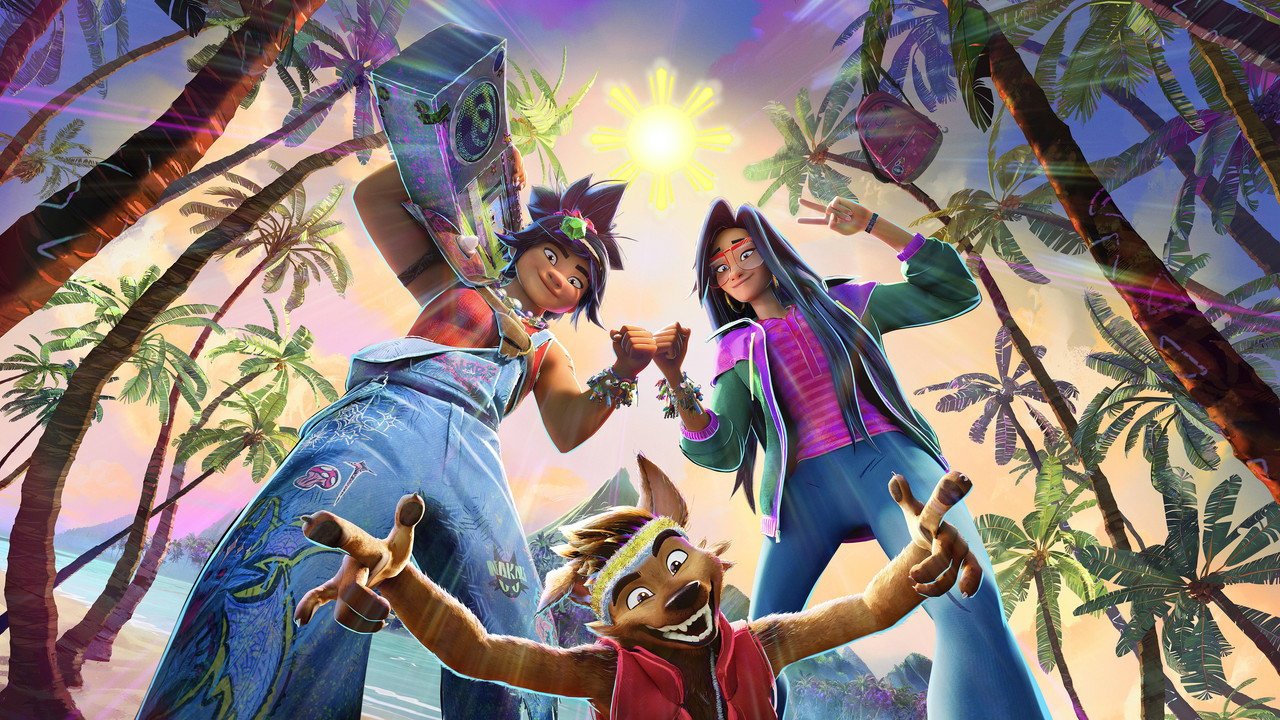
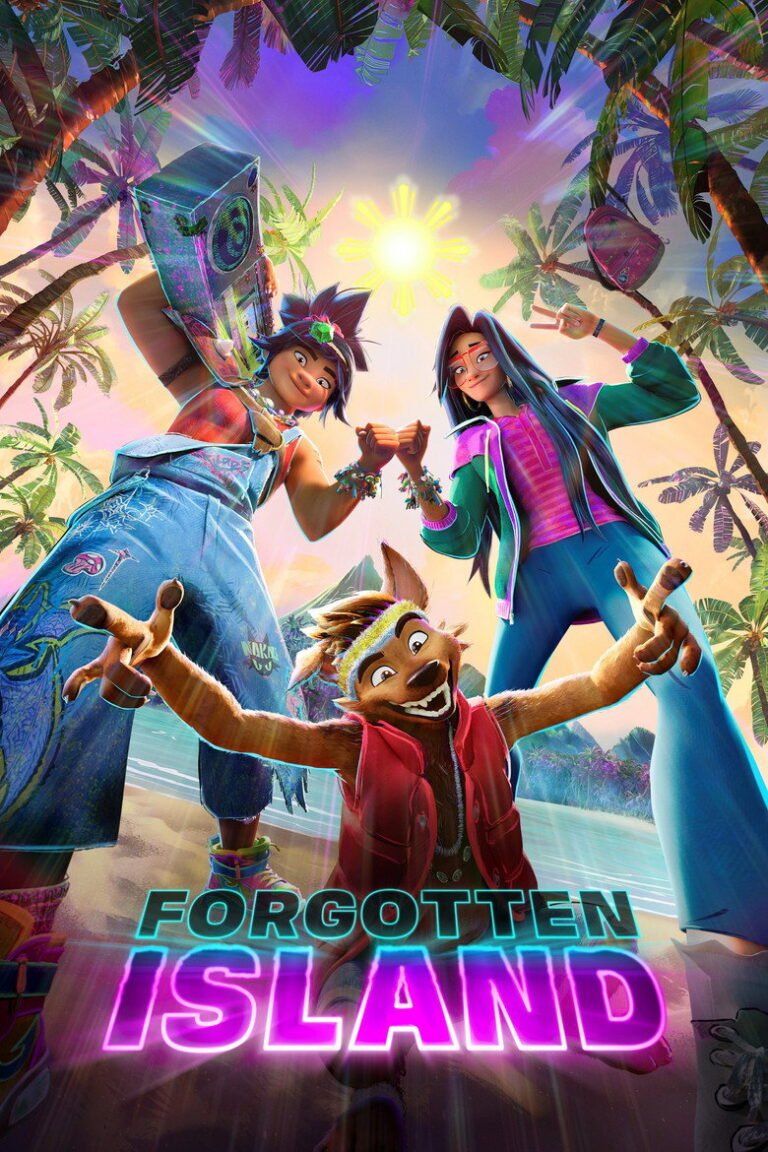
I have not seen it yet, so this is not a review. What sent me down this particular rabbit hole before we even got to the theater was the premise. DreamWorks’ new animated movie, which opened September 25, follows lifelong friends Jo and Raissa into Nakali, a fantastical island filled with magical and mythological creatures they recognize from stories told by their Filipino families. Waiting among them is the Dreaded Manananggal, one of the island’s most feared creatures and a figure drawn directly from Filipino folklore.
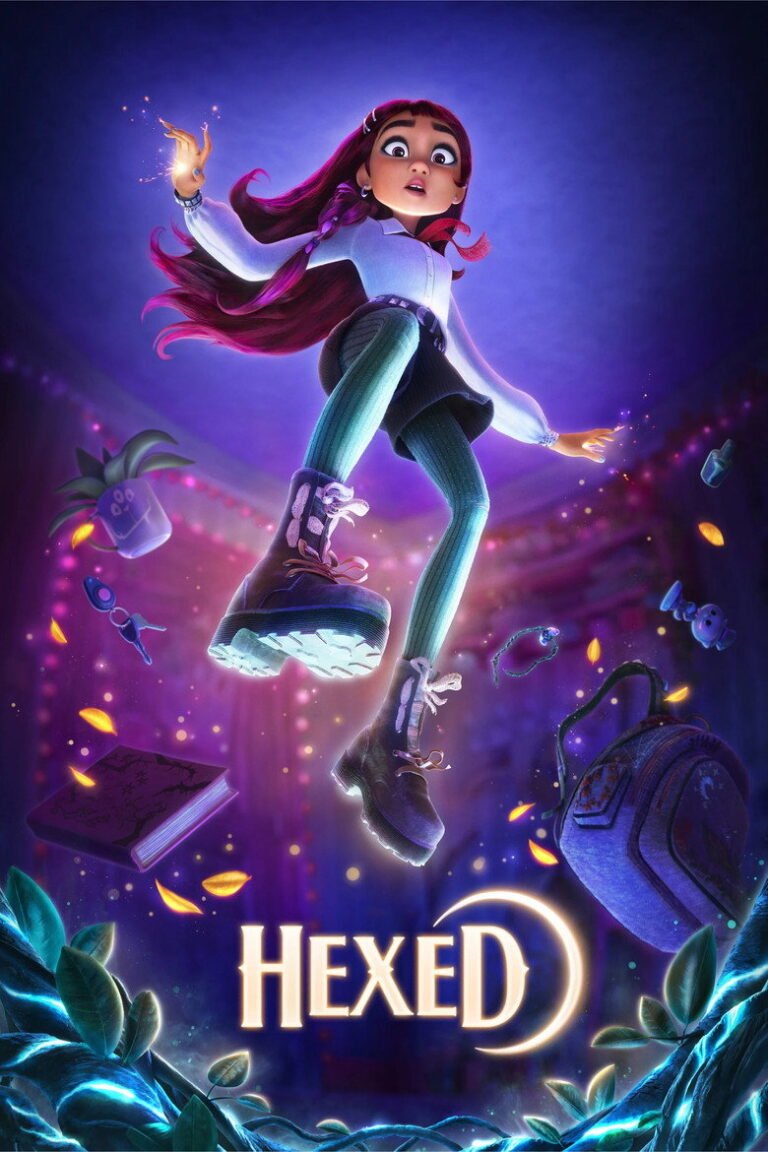
That sounds pretty great to me, especially this close to Halloween, but it also made me notice how much supernatural material seems to be following kids around lately. We have Korean pop stars fighting demons in KPop Demon Hunters. Disney is about to release Hexed, about a teenage girl who discovers magical abilities and gets thrown into an entire witch realm. Percy Jackson and the Olympians returns in November with Titans, gods, monsters, prophecy and the possible fall of Olympus. And earlier this summer, the Minions found an evil sorcerer’s spellbook and started summoning things.
That last one is where even I stopped for a second.
THE MINIONS ARE SUMMONING CTHULHU NOW
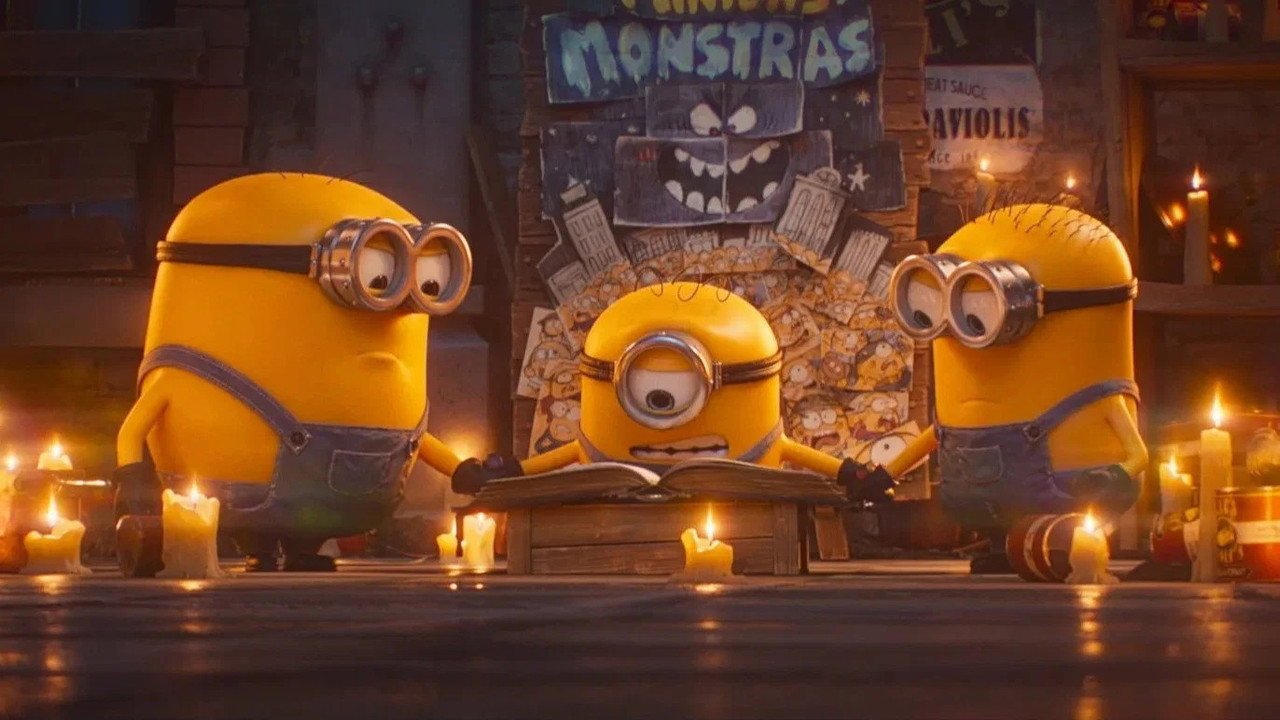
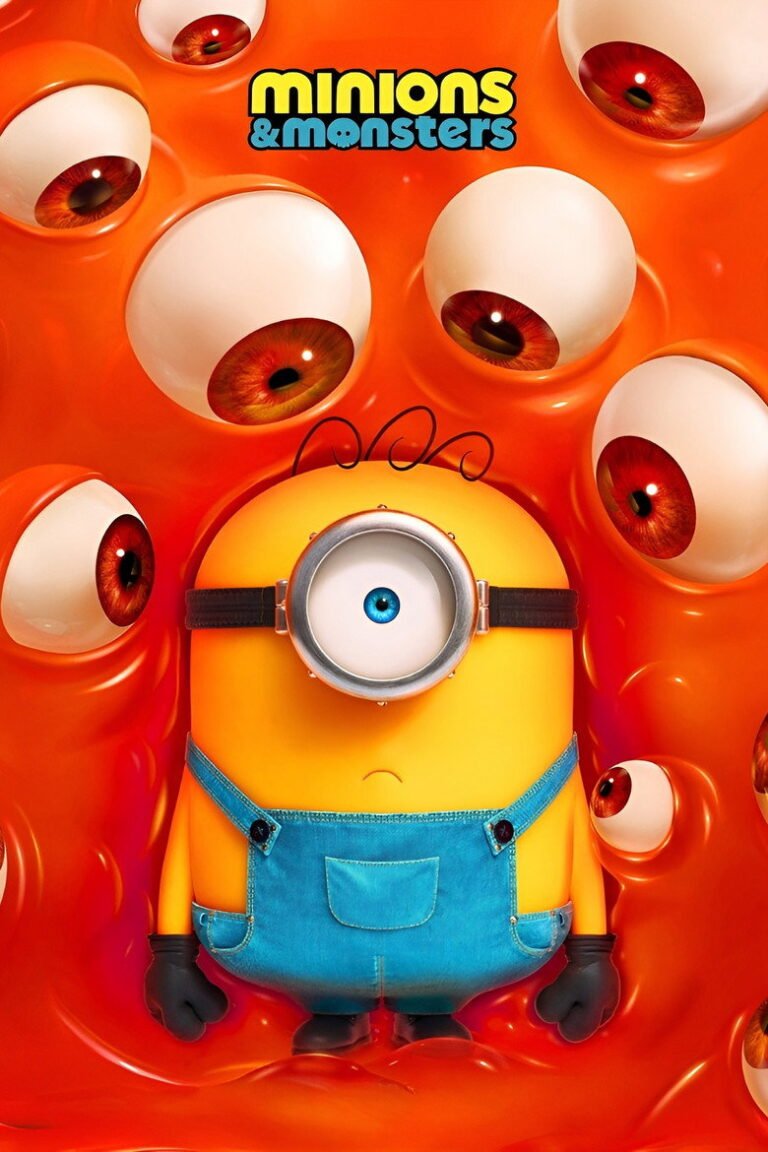
Minions & Monsters arrived in July, so Halloween gets no credit for this one. Illumination’s own description says James and Henry steal a spellbook from an evil sorcerer they once worked for and use it to summon fearsome monsters for the movie they are trying to make. When everything goes wrong, the Minions have to save the world from the creatures they released.
That is already quite a sentence to write about the Minions, but contemporary reporting on the movie describes the scene more specifically. The Christian Post reported that James and Henry read from the Necronomicon, the fictional forbidden book associated with H.P. Lovecraft’s Cthulhu mythos, while attempting an incantation to summon Cthulhu. Instead, they release a small demon-like creature named Goomi from the spellbook. The same outlet documented Christian parents and influencers objecting to the sequence and describing it as occult material being softened by comedy, cute characters and family-movie packaging.
I am not preparing to join a crusade against the Minions. I do not think my child is going to watch a yellow cartoon character perform an incantation and immediately start pricing ceremonial robes. Still, come on. There is a difference between a fairy godmother waving a wand and the Minions cracking open an evil sorcerer’s spellbook and trying to summon Cthulhu. You do not have to believe the movie is spiritually dangerous to admit that this is a pretty wild place for mainstream family entertainment to have arrived.
The problem is that the obvious explanation falls apart as soon as I compare it with my own childhood.
I grew up with witches, ghosts, monsters, magic books, haunted houses and curses. Disney was frightening children with supernatural villains long before any of us were born, and Harry Potter later turned an entire school of witchcraft and wizardry into one of the defining children’s fantasy worlds of its generation. The occult, supernatural and mythological did not suddenly invade childhood in 2026.
So why does some of this feel different?
MAYBE THERE ISN’T MORE OCCULT. MAYBE IT IS LESS TRANSLATED.
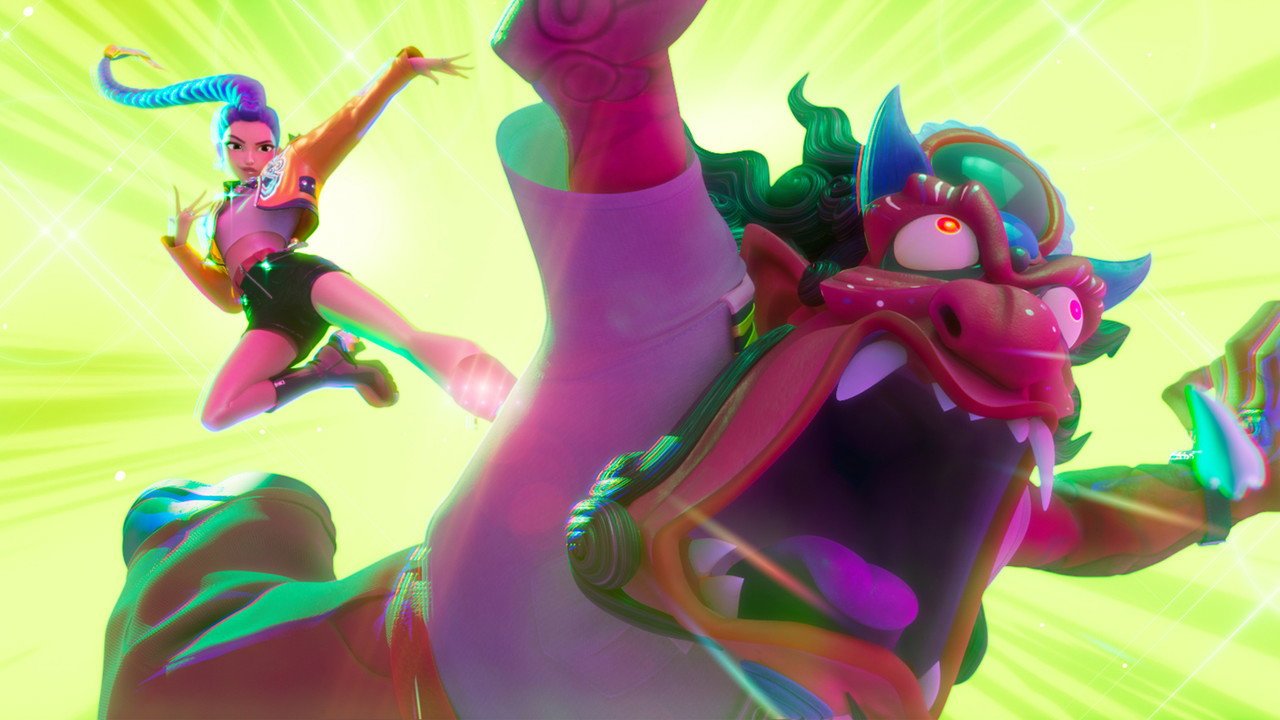
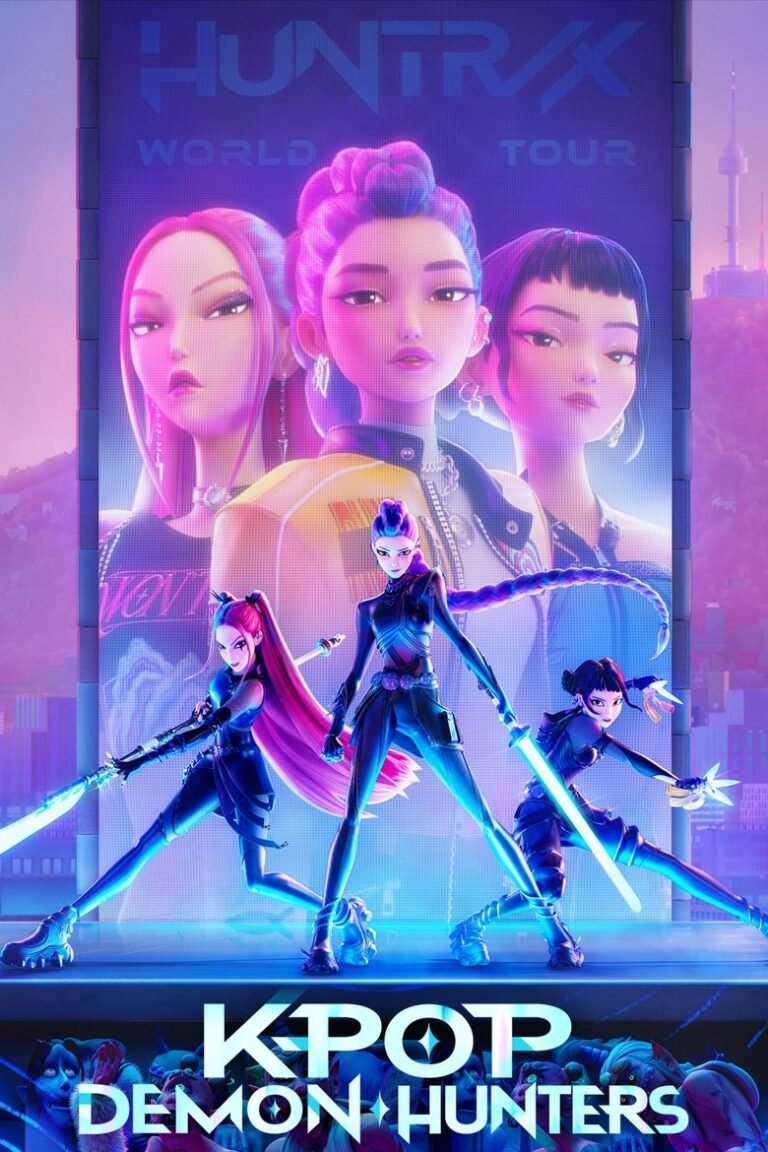
KPop Demon Hunters is a useful place to start. Netflix’s movie follows K-pop stars Rumi, Mira and Zoey, who secretly protect the human world from demons while performing as HUNTR/X. Their enemies include a rival boy band made up of demons in disguise, and the mythology goes considerably deeper than a few decorative horns and magic swords.
Audiences clearly had no trouble following it. Netflix says KPop Demon Hunters has passed 500 million views since its June 2025 debut. Director Maggie Kang has described the film as being inspired by Korean culture and folklore, with research trips to Korea and collaboration with Korean music and dance talent helping shape the movie. She has also said she takes particular pride in audiences wanting more from a Korean story and Korean characters.
That is interesting because the movie does not seem embarrassed by its specificity. It does not first convert Korean culture into some generic fantasy world that an American audience supposedly needs in order to understand it. It invites everybody into its world and assumes they will keep up.
Forgotten Island appears to take a similar approach from a completely different culture. DreamWorks says Jo and Raissa encounter the same magical and mythological creatures they heard about from their Filipino families. The production team traveled to the Philippines for research, incorporating specific details they encountered there into the film, and Mercado has described Filipino American artists at DreamWorks volunteering to help because they wanted the project to exist.
The filmmakers also did not simply decide that anything vaguely Filipino-looking would be close enough. Reporting on the production describes Filipino collaborators correcting language, helping with cultural details and participating creatively in shaping the world of the film. Mercado and Crawford have repeatedly talked about specificity as part of the goal rather than something that needed to be sanded away.
That gets much closer to what I think I have been noticing.
Credit: TMDB / promotional artwork
Promotional artwork
themoviedb.org
For a long time, the fantasy language most familiar to American kids came from a fairly recognizable collection of witches, wizards, dragons, castles, fairies, ghosts and monsters. We knew what those things were before the movie started, so they rarely felt culturally unusual. A witch was simply a witch. A dragon was simply a dragon.
Now children are being handed a much larger mythology shelf and increasingly being trusted to learn the names themselves.
The Manananggal does not have to become a vampire first.
Korean demons do not have to become generic monsters.
Zeus does not have to turn into a wizard.
The story can just tell children what something is and expect them to follow along.
Maybe the monsters were always there. What is changing is that Hollywood does not always feel obligated to translate them into the monsters we already know.
THERE IS ALSO A BUSINESS REASON FOR THAT
I would love to say Hollywood suddenly became convinced that exposing children to the cultural richness of the world was simply the right thing to do, but Hollywood is still Hollywood. Studios make expensive movies because they believe people will watch them.
What has changed is the amount of evidence showing that cultural specificity does not necessarily get in the way of a worldwide audience.
Netflix describes KPop Demon Hunters as a global phenomenon that crossed languages, generations and genres. More than 500 million views is a fairly convincing argument that a movie does not have to disguise its Korean identity to travel.
DreamWorks approached Forgotten Island with a similar confidence. The filmmakers took a research trip to the Philippines, incorporated observations from that trip into the movie, worked with Filipino and Filipino American artists and built a major studio production around Filipino mythology rather than merely borrowing a couple of creatures for decoration. ABC News has described it as the first full-length major Hollywood studio feature centered on Filipino folklore and mythology.
That does not mean the entertainment industry has suddenly stopped flattening cultures, and I would be careful about making the giant argument that an entire generation has somehow rejected “whitewashed” entertainment. That is much more than these movies prove.
What they do suggest is simpler and more interesting.
Studios have increasingly strong evidence that audiences will follow a story somewhere unfamiliar without first requiring everything unfamiliar to be made familiar.
Kids may be particularly good at that.
Give children something complicated that interests them and watch what happens. They memorize Pokémon, learn Minecraft systems I have absolutely no interest in understanding, follow superheroes through rewritten timelines and alternate universes, and absorb fictional mythology with a level of commitment most adults would never devote to useful information.
Credit: TMDB / promotional artwork
Promotional artwork
themoviedb.org
I think they can handle a Manananggal.
THE STRANGE AFTERLIFE OF THE WITCH
There is another reason I find all of this more complicated than simply asking whether children should be exposed to “the occult.”
I have always been a little uncomfortable with the way popular culture romanticizes witches, even in movies for adults like Practical Magic, but probably not for the reason people expect. I am not worried that Sandra Bullock is teaching anyone witchcraft. I think about the real human beings who were accused of being witches when that accusation could get them tortured or killed.
The popular version of witch-trial history is often sloppy, so it is worth being careful here. Historians estimate that roughly 50,000 people were executed for witchcraft across Europe, and about 80 percent of those executed were women. Men were accused too, methods of punishment varied considerably by place, and the idea that every accused witch was burned at the stake is false.
Salem is an especially useful correction. Nineteen people convicted during the 1692 Salem witch trials were hanged. Giles Corey was pressed to death after refusing to stand trial, and five other accused people died in jail. Nobody convicted in Salem was burned at the stake. The Salem Witch Museum also notes that although witchcraft was not legally a female-only crime, women were particularly vulnerable to accusations, especially women who were older, independent, outspoken or otherwise seen as violating social expectations.
That makes our modern witch fascinating to me.
We took a word that could once help destroy an actual person’s life and transformed it into one of entertainment’s most durable fantasy identities. The witch became magical, mysterious, fashionable, funny, romantic and eventually heroic. Children dress like witches for Halloween while adults watch movies in which being a witch is practically an enviable lifestyle.
I am not arguing that fiction should stop using witches. I am saying that we almost never stop to appreciate how strange that cultural transformation really is.
It also demonstrates why “occult” is such a slippery category.
Zeus is mythology. Thor is a superhero. The Manananggal is folklore. A Disney witch is fantasy. Korean pop stars fighting demons are a family musical adventure. The Minions attempting to summon Cthulhu from an evil spellbook is comedy.
Those labels do not come from some universal supernatural filing system. They come from history, culture, familiarity and context.
OUR KIDS ALSO HAVE A DIFFERENT FRONT DOOR TO THE WORLD
There is one more difference between my childhood and my kid’s that may matter as much as anything happening inside the studios.
The television used to belong to the house. Parents controlled the channels, bought the tapes, chose the DVDs and generally had a pretty good idea which pieces of culture were making their way into the living room.
A tablet is a very different front door.
Common Sense Media’s 2025 census of children eight and younger found that 40 percent had their own tablet by age two and 58 percent by age four. Nearly one in four had a personal cellphone by age eight, while 51 percent of children eight and younger had their own mobile device of some kind. The same research found traditional television viewing declining as gaming and short-form video became larger parts of children’s media lives.
Credit: TMDB / promotional artwork
Promotional artwork
themoviedb.org
That does not mean children have suddenly escaped parental supervision or that parental controls have ceased to exist. It means their cultural environment is much less centralized.
An American child can encounter Korean music, Japanese animation, Greek mythology, Filipino folklore, Marvel superheroes, gaming lore and whatever bizarre thing an algorithm recommends next without necessarily separating those things into the cultural categories an adult does.
Maybe what feels foreign to us simply does not feel particularly foreign to them.
That possibility strikes me as more interesting than declaring modern children smarter, more enlightened or somehow fundamentally different from every generation before them. They may simply be starting from a different baseline.
Their world is bigger earlier.
SO ARE KIDS’ MOVIES REALLY GETTING MORE OCCULT?
Maybe a little.
I am still not going to pretend the Minions & Monsters example is nothing. An evil sorcerer’s spellbook, an incantation from the Necronomicon and an attempted Cthulhu summoning in a Minions movie is weird enough that even someone with absolutely no interest in an occult panic can look at it and say, “Okay, we have moved the line a little.”
But that does not explain Forgotten Island, KPop Demon Hunters, Percy Jackson and Hexed by itself. Those stories are drawing on different traditions, using the supernatural for different purposes and asking audiences to accept very different kinds of fantasy. Disney’s Hexed openly builds its story around a vast witch realm, while Percy Jackson returns November 20 with The Titan’s Curse, involving a captured goddess, Titans, prophecy and the possible fall of Olympus.
What feels different in 2026 is not simply that our children are seeing monsters. Children have always had monsters.
The supernatural has escaped the Halloween aisle. It is appearing throughout the year, in mainstream family entertainment, and it is coming from a much wider collection of traditions than the fantasy vocabulary many American parents grew up with.
Some parents are going to look at that and see normalization of the occult. The reaction to Minions & Monsters proves that some already do.
I look at it and find myself somewhere more complicated.
In a few minutes, I am going to close this laptop and take my kid to see Forgotten Island. I do not know whether we are going to love it, and I do not know whether I will walk out convinced that every strange creature in a children’s movie is automatically cultural enrichment.
What I do know is that if my kid leaves the theater wanting to know what a Manananggal is, why Filipino families tell stories about it and where that creature came from, I am going to have a difficult time convincing myself that something has gone terribly wrong.
Maybe kids’ entertainment really is getting stranger.
Or maybe the monsters were always there, and the world we are willing to show our children has finally gotten a little bigger.

What This Is About

Community
What Did You Think?
0 comments
No comments yet. Start the conversation.