
How Monster: The Lizzie Borden Story Turns Gaps in History Into Convincing Truth
Netflix’s MONSTER fills the gaps in Lizzie Borden’s story so convincingly that speculation starts to feel like history, and its unlikely connection to Aileen Wuornos makes the mythology even harder to separate from the truth.
Credit: TMDB / promotional artwork
Promotional artwork
themoviedb.org
I expected a horror story from MONSTER: THE LIZZIE BORDEN STORY. What I got was eight hours of television so persuasive that, by the finale, I was ready to call it the official version of a murder case nobody has actually solved.
That is the part I cannot stop thinking about.
The broad facts of Lizzie Borden are familiar even if the details have blurred into folklore. Andrew and Abby Borden were killed in their Fall River home in 1892. Lizzie was charged, tried and acquitted the following year. She remained the only person formally charged in the murders, and the case remains officially unsolved.
MONSTER knows all of that. It simply decides uncertainty is not enough.
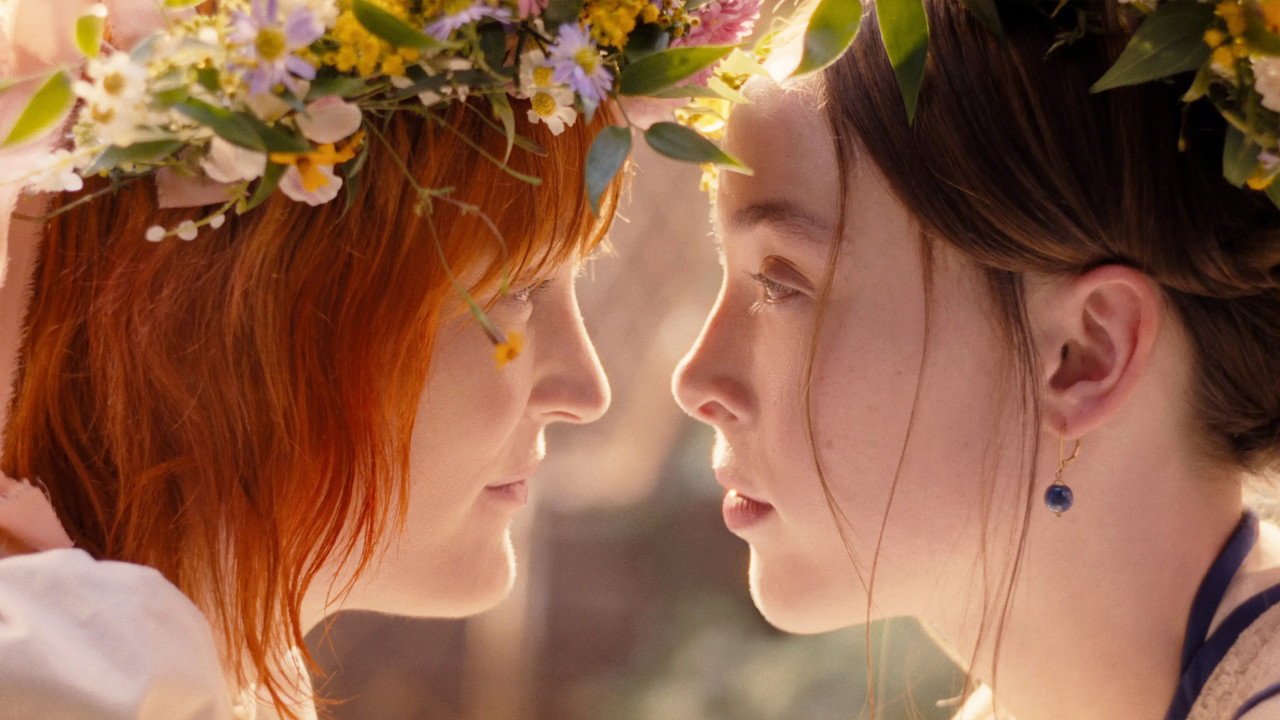
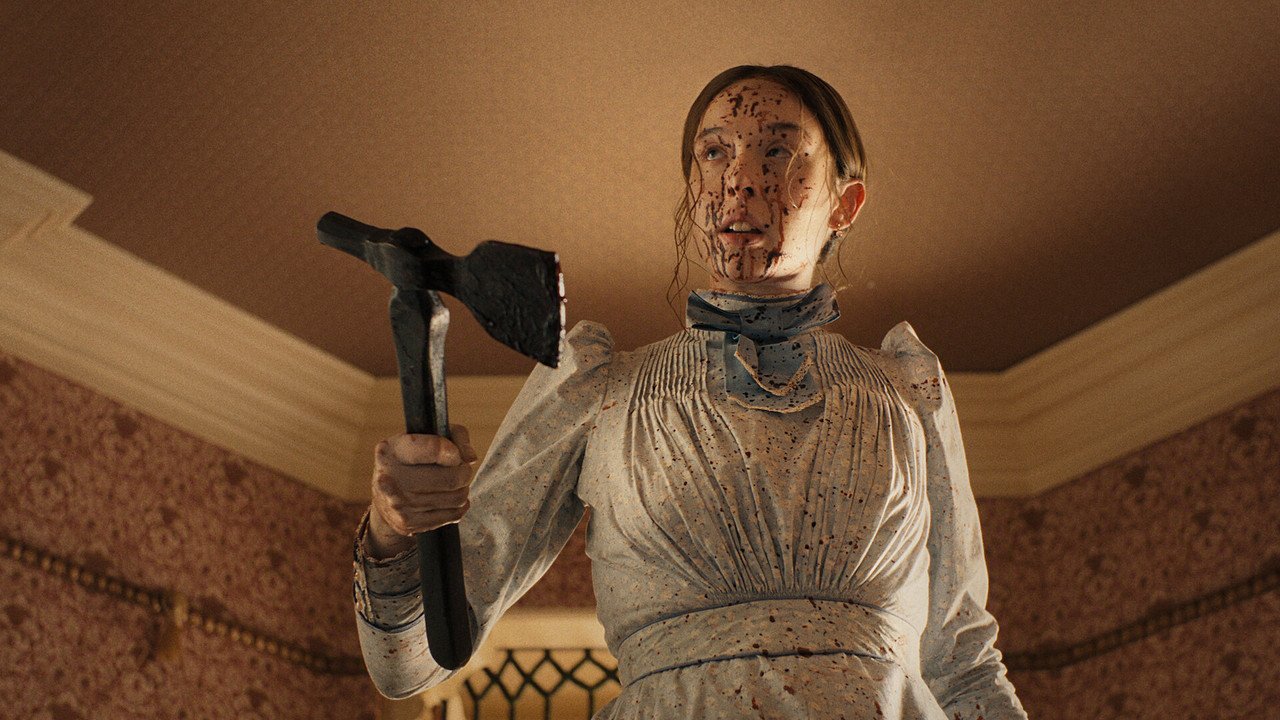
It gives Lizzie a psychology. It gives the household a specific kind of cruelty. It gives her a forbidden relationship, a breaking point and, eventually, a reason. By the time Ella Beatty’s Lizzie starts swinging an axe, the series has built such a complete emotional argument that the question of whether she did it almost feels settled.
Then you start checking the evidence.
That is when the show becomes more interesting than I expected.
Charlie Hunnam is a big reason the illusion works. Holy crap, hello there, Charlie. Apparently I have missed him since the end of HAMLET. Sorry, SONS OF ANARCHY.
As Andrew Borden, Hunnam is extraordinary. The stutter, the social discomfort, the sudden rage, the vomiting, the blood, the way Andrew seems almost physically incapable of existing comfortably around the women in his house. It is a highly specific performance, the kind that feels researched even when you have no idea which details came from history and which came from the actor.
That distinction matters because MONSTER is unusually open about the fact that much of its Lizzie is constructed.
Netflix’s own true-story guide describes the abused, repressed Lizzie as the series’ version of events, while Beatty is even more direct about the character she played. She calls her a “very fictionalized version” of the real woman, built by using historical details to fill the enormous gaps in what we actually know.
That difference is not small.
The show does not merely suggest that Lizzie may have killed Andrew and Abby. It supplies a reason so complete that the violence begins to feel like the end of a story we have already been told.
Then there is Maggie.
I had never heard of her before this series, and I assumed she was one of those historical characters assembled from several people because television needed somebody in the room.
She was real.
In her June 7, 1893 trial testimony, the Borden maid gave her full name as Bridget Sullivan. She had worked for the family for nearly three years and was inside the house on the morning of the murders.
Even the name “Maggie,” one of those tiny details that sounds almost too perfect to be true, comes directly from the record.
At trial, Sullivan was asked whether she was sometimes called Maggie in the Borden household.
“Yes, sir.”
Asked who called her that, she answered Lizzie and Emma.
That is exactly how a show like MONSTER gets into your head.
One strange little detail turns out to be completely authentic, so you begin trusting the material around it.
The romance is another matter.
A review of the historical record published by PEOPLE identifies both the romantic relationship between Lizzie and Bridget and Bridget’s participation in the murders as fictional elements created for the series. Sullivan’s own testimony places her elsewhere in the house during crucial portions of the morning, and no established historical record ties her to the killings as Lizzie’s accomplice.
Lizzie’s sexuality is similarly unresolved.
Her later relationship with actress Nance O’Neil was close enough to create gossip at the time and speculation ever since. When Vanity Fair asked historian Cara Robertson, author of THE TRIAL OF LIZZIE BORDEN, how she understood the relationship, Robertson described it as probably romantic while stopping short of calling it necessarily sexual. The surviving record simply does not give us enough to assign Lizzie a sexual identity with certainty.
The chronology is clearer: Lizzie and O’Neil appear to have met in 1904, more than a decade after the murder trial.
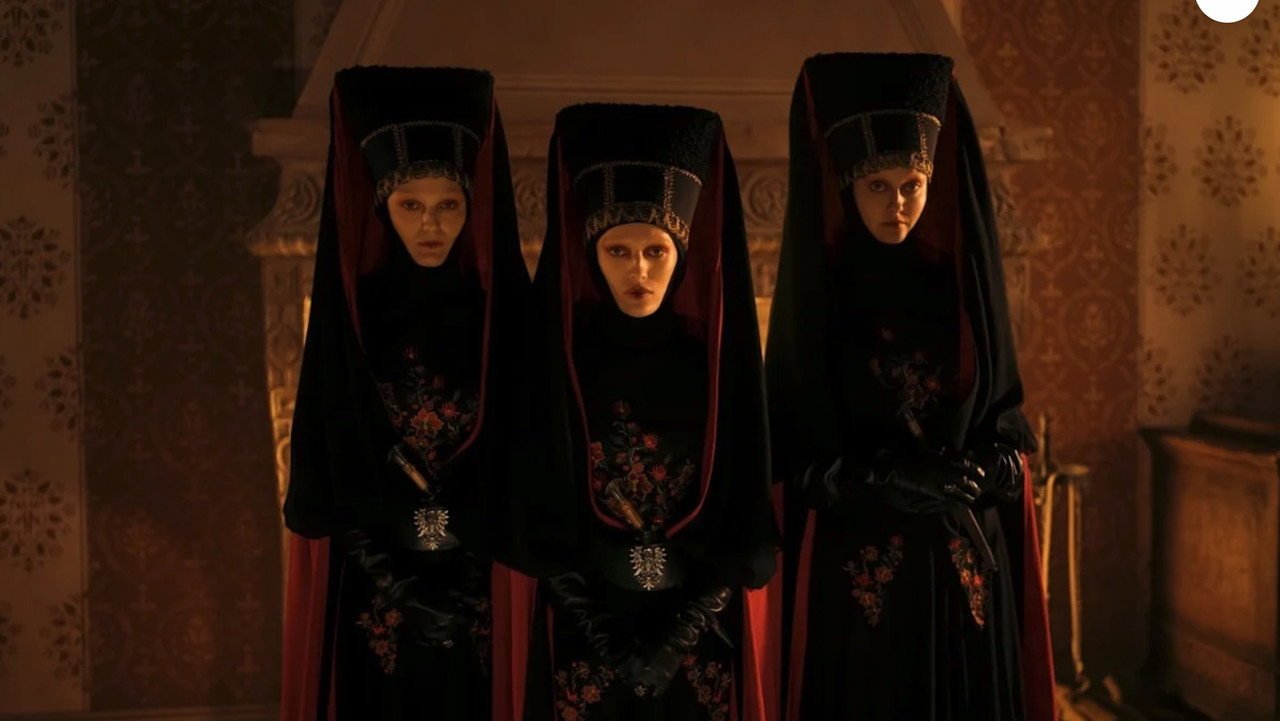
MONSTER moves Nance backward into the trial and lets an actress teach Lizzie how to perform innocence for a jury.
Historically, it does not work.
Dramatically, it is one of the smartest ideas in the season.
A television series that is constructing its own Lizzie Borden gives Lizzie an actress who teaches her how to construct a version of herself.
Credit: TMDB / promotional artwork
Promotional artwork
themoviedb.org
That is practically a confession.
And then Aileen Wuornos enters the story.
This is where the series stopped being simply an interesting Lizzie Borden retelling for me.
Sarah Paulson’s Aileen is fascinated by Lizzie. She visits the Borden house. She talks to her. Eventually, the series places these two women across time from one another as though Lizzie’s story has been waiting nearly a century for someone else to recognize herself in it.
The scenes between them are remarkable, particularly because of how absurd they are if you strip away the drama.
Aileen is alone.
Lizzie is dead.
This is a woman having a conversation with someone who is not there, hallucinating that a woman from another century finds something meaningful in her life.
Paulson makes it devastating.
And it is almost entirely invented.
Netflix’s own account says directly that there is no evidence the real Wuornos was fixated on the Borden killings. The visit to the Borden bed and breakfast could not have happened either: Wuornos was arrested in 1990, six years before the house opened as a bed and breakfast.
So why put Aileen here?
Because MONSTER is not arguing that Lizzie and Aileen had a historical connection. It is creating one.
Beatty has described the season as tracing a “legacy of female rage,” while the series uses Wuornos as someone who inherits Lizzie’s mythology decades later.
That is where the show got me.
I loathe serial-killer porn.
I have never liked the industry that turns murderers into enduring pop-culture characters while the people they killed become names in a paragraph somewhere behind them. MONSTER is unquestionably operating inside that machinery. It is stylish, bloody, cast with movie stars and deeply interested in the psychology of people associated with terrible crimes.
And I still found myself feeling for Aileen Wuornos.
That bothered me more than anything else in the season.
The uncomfortable part is that Wuornos really did have a childhood marked by extraordinary trauma. During the penalty phase of her case, the defense presented evidence that her mother abandoned her, that she became pregnant after being raped by a family friend at about 14, and that there was evidence of physical and verbal abuse in her grandparents’ home. A family member disputed parts of that portrayal, something the Florida Supreme Court opinion also records.
The same record shows why turning that history into a simple explanation for murder is impossible.
Wuornos gave substantially different accounts of Richard Mallory’s killing. In a later version, she described a brutal sexual assault and said she shot him while defending herself. Earlier accounts differed on major points. Prosecutors also used similarities between Mallory’s death and other killings to challenge her claim that she had been attacked first.
The truth is harder than the television version.
Wuornos can have been a victim and still have created victims of her own.
Those things do not cancel each other out.
That, more than any theory about female rage, is what made the Aileen material work for me. MONSTER managed to place me close enough to a person associated with horrific acts that I could briefly see the human being without losing sight of what happened to the people around her.
Understanding is not justification.
Empathy is not acquittal.
That distinction should be obvious, but true crime has never been particularly good at maintaining it.
MONSTER gets dangerously close to the other side of that line at times. It is still entertainment built from blood, celebrity and mythology. But the best parts of this season understand that reducing someone to the word “monster” can obscure something important about human behavior.
We are all human.
We all feel.
Credit: TMDB / promotional artwork
Promotional artwork
themoviedb.org
We are also capable of horrific things, and those things come with consequences.
The fact that I could be placed in somebody else’s shoes for eight hours and come away feeling something for them does not erase a murder. It tells me the storytelling worked.
There is another strange echo running through the Aileen story that the series does not even need to invent.
Charlize Theron played Wuornos in Patty Jenkins’ 2003 MONSTER and won the 2004 Academy Award for Best Actress.
Sarah Paulson is now playing Wuornos inside another production called MONSTER.
There is no evidence that Ryan Murphy and Ian Brennan named the anthology as some deliberate reference to Jenkins’ film, and it would be irresponsible to pretend otherwise.
But the coincidence is impossible to miss.
Theron gave us one Aileen Wuornos.
Paulson gives us another.
Beatty gives us one Lizzie Borden.
Hunnam gives us one Andrew Borden.
History gives us fragments of all of them.
That gap between the person and the performance is where this season lives.
I began MONSTER expecting horror and finished it convinced I had watched the definitive Lizzie Borden story. Researching it afterward dismantled that certainty almost immediately.
Maggie was real.
The nickname was real.
The murders were real.
The trial was real.
Nance O’Neil was real.
Aileen Wuornos was real.
But many of the relationships, motives and psychological explanations that made those eight hours feel so complete were not.
Oddly, that did not make me think less of the series.
It made me understand what it had actually accomplished.
MONSTER: THE LIZZIE BORDEN STORY does not finally tell us what happened inside the Borden house in 1892. Nobody can.
What it shows, sometimes intentionally and sometimes simply by being so convincing, is how easily the empty spaces in history become stories, and how quickly a good enough story starts to feel like memory.
I went looking for the official Lizzie Borden story.
There isn’t one.
There is evidence, rumor, speculation, an acquittal, a maid named Bridget who really was called Maggie and more than a century of people trying to make the pieces fit.
MONSTER makes them fit beautifully.
That is not the same thing as making them true.
For once, that difference made the story more interesting.
Kazoo.
References
Sources & References
15
Links cited, consulted, or used as background for this article. Inclusion does not imply independent verification of every claim.
-
redreactions.com
The Lizzie Borden Murders Explained — What Happened on August 4, 1892? | RED REACTIONS
2 weeks ago -
legendsofamerica.com
Lizzie Borden – Killer of Fall River, Massachusetts? – Legends of America -
biography.com
Who Were Andrew and Abby Borden? Inside Netflix's Monster: ‘The Lizzie Borden Story’
2 weeks ago -
history.com
Lizzie Borden's parents found dead | August 4, 1892 | HISTORY
July 31, 2025 -
tamaracamerablog.com
Lizzie Borden: The True Story Behind the 1892 Fall River Murders
2 weeks ago -
bbc.com
'A story of deep psychological drama': The notorious axe murders of Lizzie Borden's parents still haunt, 134 years on
3 weeks ago -
en.wikipedia.org
Lizzie Borden – Wikipedia
3 days ago -
people.com
What Happened to Lizzie Borden After Her Trial? Inside Her Life After Being Acquitted of Murder
2 weeks ago -
biography.com
The True Story Behind ‘Monster’: Why Lizzie Borden Was Acquitted
2 weeks ago -
history.com
Lizzie Borden acquitted | June 20, 1893 | HISTORY
3 weeks ago -
aetv.com
What Happened to Lizzie Borden After Her Trial? | A&E
1 week ago -
britannica.com
America’s 5 Most Notorious Cold Cases (Including One You May Have Thought Was Already Solved) | Britannica
3 weeks ago -
genius.com
Jon English – She Was Real Lyrics | Genius Lyrics -
shazam.com
She Was Real – Jon English: Song Lyrics, Music Videos & … -
youtube.com
JON ENGLISH – SHE WAS REAL – YouTube
March 10, 2016

What This Is About


Community
What Did You Think?
0 comments
No comments yet. Start the conversation.