
Netflix Keeps Trying to Murder My Children, and I Keep Pressing Play
The Last House, Facing El Chapo and The Whisper Man are very different movies. After watching all three on Netflix, I realized they had found exactly the same button to push.
Credit: TMDB / promotional artwork
Promotional artwork
themoviedb.org
Spoiler warning: This story discusses major plot developments from The Last House, Facing El Chapo and The Whisper Man.
Over the course of a few weeks, I watched The Last House, Facing El Chapo and The Whisper Man, three very different movies that all landed in Netflix’s U.S. Top 10 during the same late-August stretch.
One is science fiction. One is a Spanish-language crime thriller inspired by real events. One is a serial-killer mystery based on a bestselling novel.
Somehow, every one of them eventually arrived at roughly the same question:
Wouldn’t it be terrible if something happened to the kids?
Yes, Netflix. It would.
I have kids. You have successfully identified my weakness.
The problem is that by the third movie, I started wondering whether making a parent imagine the death of a child is sometimes being used as a shortcut to making a thriller feel more substantial than it really is.
Fear is powerful. Parental fear may be even more powerful.
But making my heart race is not necessarily the same thing as giving me something meaningful to think about afterward.
The Last House: Thank God, It’s Only the Monsters
The Last House got me first.
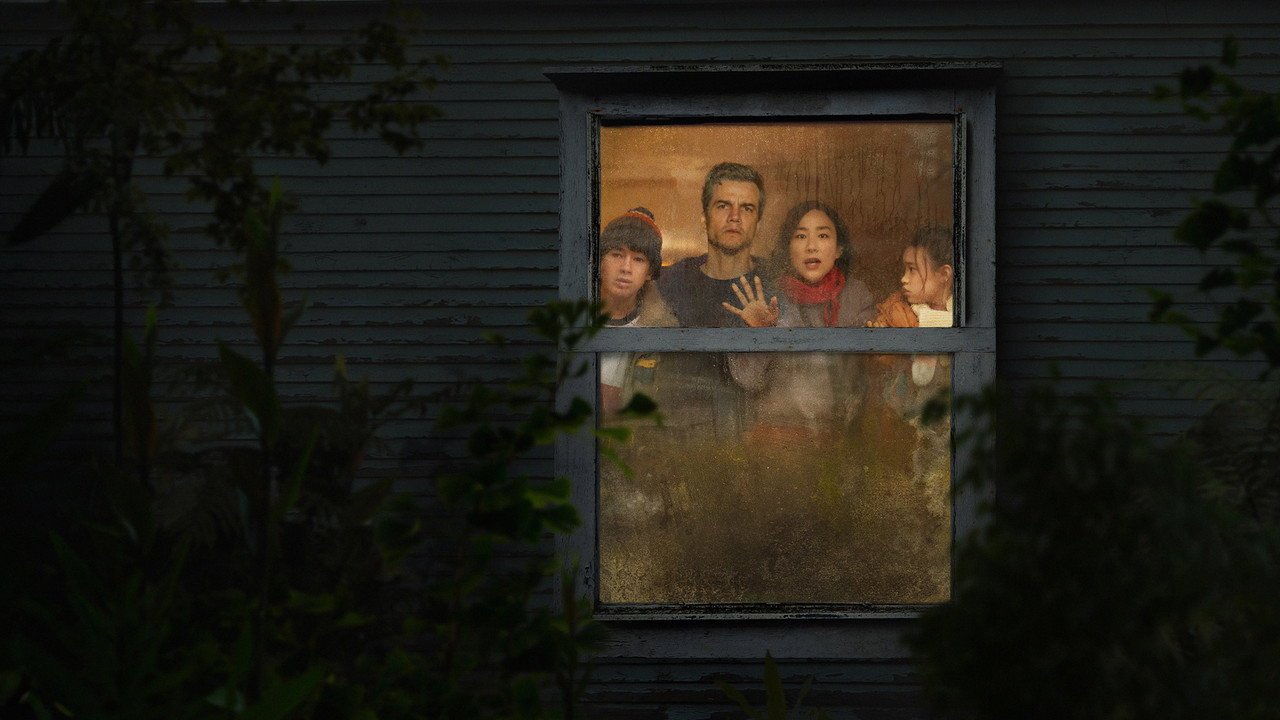
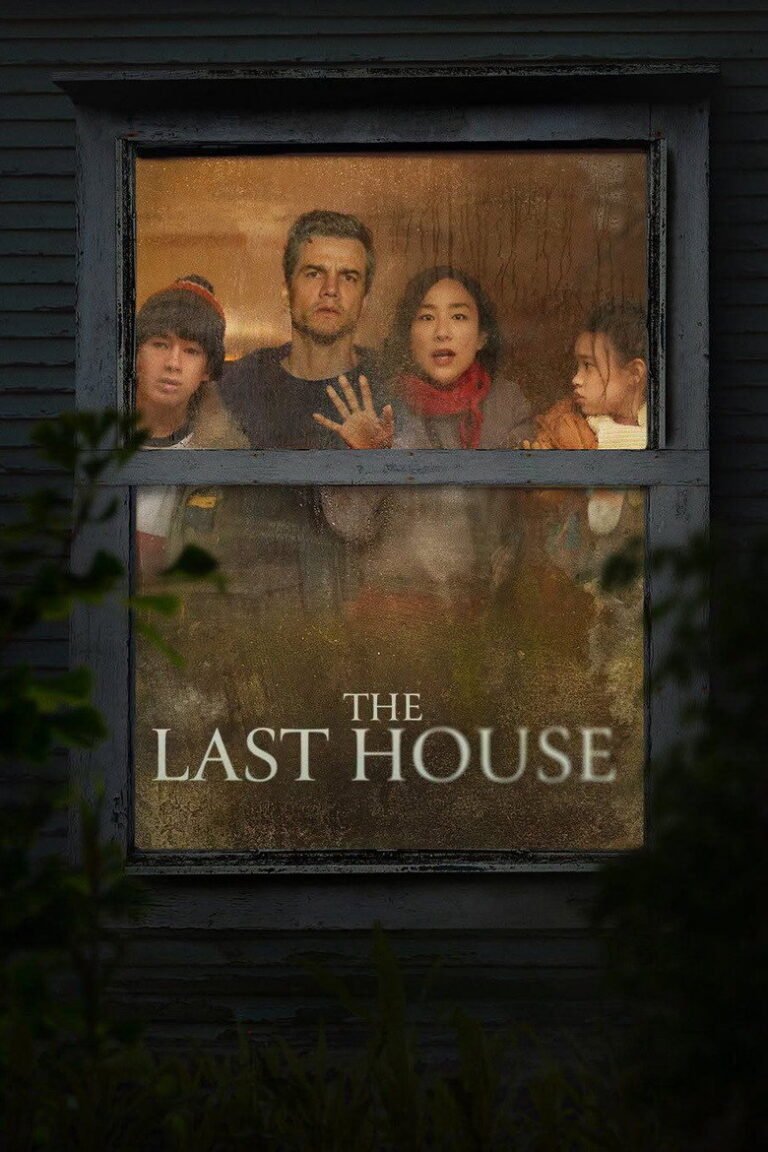
Greta Lee and Wagner Moura play Ann and Jason Delgado, parents trapped inside their home with their children while something strange and dangerous unfolds outside.
The movie does a good job of withholding just enough information that my imagination became considerably worse than whatever was actually happening.
What is outside?
What happened to everybody else?
What is going to happen to these kids?
At various points, I found myself preparing for the movie to become something much uglier than the science-fiction thriller I thought I was watching.
Are they going to eat these children? Is this going to become a family-murder movie? How unpleasant is this thing planning to get?
Then the answer finally arrived. Monsters. Essentially, octopuses from hell.
Thank God.
That is a ridiculous sentence until you have watched a movie convince you that murderous sea creatures are the reassuring option.
Director Louis Leterrier has explained to Netflix that the creatures are ancient ocean dwellers rather than aliens, driven from the depths after humanity polluted the environment, raised global temperatures and began destroying their habitat.
That gives the movie somewhere to go after all the anxiety.
The danger is not simply there to threaten the children. Eventually, the movie changes our understanding of what the danger actually is.
Humanity may be the invasive species. There is at least an idea waiting on the other side of the panic. I could live with that.
The kids could, too. Even better.
Facing El Chapo: This Time, the Threat Worked
Then came Facing El Chapo.
Netflix describes the film as a thriller inspired by the real events surrounding Operation Black Swan and the January 2016 recapture of Joaquín “El Chapo” Guzmán.
The story follows two federal police officers who unexpectedly find themselves face to face with Guzmán and have to decide what their principles are worth when refusing a cartel boss can put considerably more than their own lives in danger.
This one worked on me.
It reminded me a little of Training Day.

Credit: TMDB / promotional artwork
Promotional artwork
themoviedb.org
Not because the stories are especially similar, but because Facing El Chapo has that same pressure-cooker feeling where a situation that already seems dangerous keeps becoming more morally complicated, more unpredictable and more impossible to escape.
And once the officers’ families become leverage, the movie knows exactly what it is doing.
Again, the kids.
Again, I am sitting there wondering how far the movie is willing to go.
At one point, Facing El Chapo had me convinced it had crossed a line I desperately did not want it to cross. It played that moment hard enough that I felt genuine relief when the truth finally arrived.
Manipulative? Absolutely.
Effective? Also absolutely.
The difference is that Facing El Chapo had built enough tension around the officers’ decisions that the threat felt like a consequence of the world they were trapped inside, rather than something added solely to make the audience feel something.
I would recommend it.
It also accomplished something I did not expect: I generally do not go looking for subtitled movies, and I realized afterward that this was the first one I had watched since Okja.
I barely thought about the subtitles.
That may be one of the simplest compliments I can give the movie. When a thriller has me completely invested in what happens next, I stop thinking about how I am reading it.
Then The Whisper Man Pushed the Button Again
By the time I got to The Whisper Man, Netflix had apparently completed my psychological profile.
Adam Scott plays Tom Kennedy, a widowed crime writer whose eight-year-old son, Jake, is abducted.
Robert De Niro plays Tom’s estranged father, Pete Willis, a retired detective who caught the original Whisper Man more than a decade earlier.
Michael Keaton, whose casting Netflix announced well before release, appears as Frank Carter, the imprisoned killer at the center of the original case.
There is plenty there for a good thriller.
There is also enough generational damage for three movies.
Pete devoted himself to catching a murderer and became alienated from his own son. Tom grew up carrying that damage.
Now Tom has a son of his own, Pete barely knows his grandson, and suddenly the nightmare that consumed one generation has reached directly into the next one.
That is a strong idea.
For a while, I thought The Whisper Man might really do something with it. Instead, I increasingly felt the machinery working.
A missing child. Murdered children. A grieving father. An estranged father. A serial killer obsessed with fathers and sons.
The possibility that Jake will become the next victim. Every available parental nerve gets pressed. And yes, it works in the moment.
I wanted that kid found. I wanted him alive.
I wanted this family to get out of the movie with something left.
But when it was over, I did not feel as if the movie had earned quite as much emotional weight as it had extracted from me. That distinction matters.
Being Disturbed Is Not the Same as Being Moved
The Whisper Man is not terrible.
There are good performances. De Niro gives the father-son material some gravity. Scott is convincing as a man whose grief, fear and complicated relationship with his father are colliding all at once. Keaton was a welcome surprise, even knowing his involvement was public long before release.
The movie kept me watching, and it kept me guessing.
Then, near the end, it adds one more idea.

Credit: TMDB / promotional artwork
Promotional artwork
themoviedb.org
Jake has been seeing a mysterious girl in a blue sweater.
Tom eventually discovers an old photograph revealing that the girl appears to be Rebecca, Jake’s dead mother, as a child.
The movie leaves enough ambiguity that the moment can be understood psychologically, supernaturally, or somewhere in between. I am still not convinced it needed it.
By that point, The Whisper Man had already spent nearly two hours on serial murder, child abduction, grief, fractured fathers and sons, inherited trauma and the possibility of reconciliation.
Then: maybe a ghost. It is one more emotional flourish in a movie that already has plenty. And that is where these three movies finally connected for me.
Netflix Did Not Just Recommend These Movies. It Got Me to Watch Them.
I probably would not have chosen The Whisper Man on my own.
That is important.
After its Aug. 28 release, The Whisper Man debuted at No. 2 on Netflix’s U.S. weekly movie chart for Aug. 24 through Aug. 30.
During that same tracking week, Facing El Chapo ranked No. 3 in the United States, while The Last House was still hanging on at No. 9 in its fourth week on the chart.
That means these were not three random movies I happened to pull from the catalog.
Netflix put all three directly in front of viewers at essentially the same time, and I followed.
That is marketing in action. Not necessarily an advertisement. Not a commercial interrupting something I wanted to watch.
The platform itself is the marketing.
This is what everybody is watching.
This is trending.
Try this next.
And it worked.
Netflix got me into a Spanish-language crime thriller I might otherwise have skipped. Good call.
It got me into a strange science-fiction movie about a family trapped in a house with ocean monsters. Also worthwhile.
Then it got me to spend almost two hours with a murderous-pedophile serial-killer story, a genre I would almost never seek out voluntarily.
I watched the whole thing. So Netflix won that round, too.
Just Please Stop Threatening the Children for a Minute
Maybe three movies are not a trend.
They are certainly not enough to claim Netflix has ordered filmmakers to terrorize parents until subscriber retention improves.
But watching The Last House, Facing El Chapo and The Whisper Man this close together changed the way I reacted to the device.
The first time, the fear overwhelmed me. The second time, the movie earned it. By the third time, I could see the button being pushed.
That does not mean filmmakers should stop putting children in danger. Some of the greatest thrillers ever made depend on exactly that fear. It does mean the fear has to lead somewhere.
If you are going to make me imagine the worst thing that could happen to my family, I want more in return than the relief of discovering that you did not actually do it.
Give me an idea. Give me a character revelation. Change how I understand what I have been watching. Make all that anxiety mean something after my heart rate comes back down.
Otherwise, terror can start masquerading as substance.
And after three Netflix movies in a row, I am ready for a recommendation that does not send me upstairs afterward to make sure my kid is still sleeping peacefully.
Maybe a comedy. Please.
References
Sources & References
10
Links cited, consulted, or used as background for this article. Inclusion does not imply independent verification of every claim.
-
hollywoodreporter.com
‘The Whisper Man’ Review: Robert De Niro, Michelle Monaghan and Adam Scott in Netflix’s Twisty Airport Paperback Serial-Killer Procedural
2 weeks ago -
fandomwire.com
The Whisper Man: Release Date, Time, Cast, Plot, and Everything We Know
2 weeks ago -
castrumors.com
Cast of The Whisper Man (2026) Movie | Full List of Actors and Their Roles
4 days ago -
netflix.com
The Whisper Man Cast: Meet the Star-Studded Ensemble Searching for a Killer
2 weeks ago -
usatoday.com
First look – See Adam Scott, Robert De Niro in Netflix's 'Whisper Man'
April 29, 2026 -
mediaplaynews.com
Netflix: Mexican Crime Drama 'Facing El Chapo' Topped Weekly Streaming Through Aug. 23 – Media Play News
2 weeks ago -
collider.com
Netflix’s Spiritual Successor to ‘Narcos’ Officially Becomes a Streaming Sensation
2 weeks ago -
cbr.com
Netflix Scores New No. 1 With 'Easy-to-Follow' Sicario Replacement
2 weeks ago -
movieweb.com
Netflix's New 91-Minute Action Thriller Is Already The Biggest Movie in the World
2 weeks ago -
aol.com
Unexpected New Cop Thriller Is Suddenly Netflix’s Biggest Movie – AOL
2 weeks ago

What This Is About

The Whisper Man
View Title


Facing El Chapo
View Title
The Last House
View Title

Adam Scott
View Person

Robert De Niro
View Person

Michael Keaton
View Person
Community
What Did You Think?
0 comments
No comments yet. Start the conversation.