
We Got Our Goodbye to Picard. We Aren’t Ready to Say Goodbye to Patrick Stewart.
Sir Patrick Stewart gave generations of fans two extraordinary heroes, one of STAR TREK's greatest finales, and a lifetime of unforgettable performances. For those of us who grew up with him, saying goodbye is going to be especially difficult.
In 2002, STAR TREK: NEMESIS gave Captain Jean-Luc Picard and the crew of the Enterprise a farewell they didn’t deserve.
Coming after the disappointing STAR TREK: INSURRECTION, it was a particularly unsatisfying way to end the cinematic adventures of one of television’s greatest ensembles. Data was dead, the franchise was running out of steam, and the people we’d followed for fifteen years simply disappeared from the big screen.
That wasn’t how THE NEXT GENERATION was supposed to end.
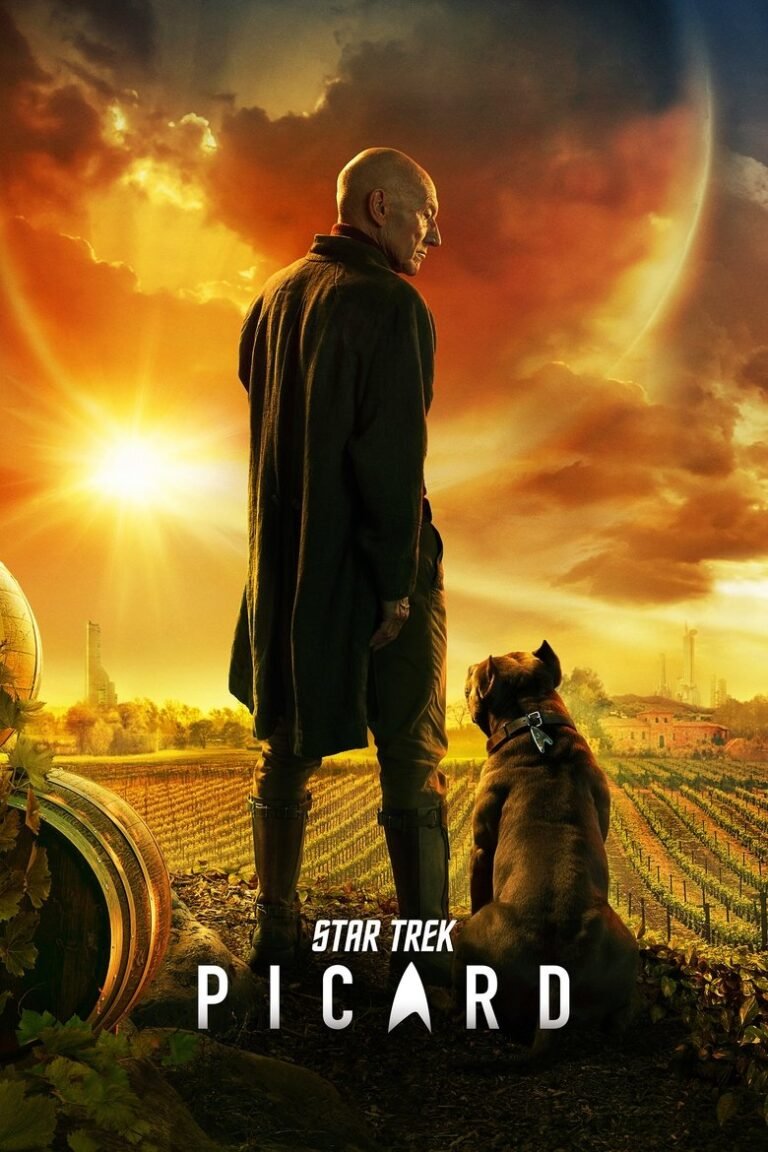
Then, twenty-one years later, the third season of STAR TREK: PICARD did something remarkable. It righted many of the wrongs of those final two films, reunited a beloved crew, and gave us the kind of grand finale we’d been waiting decades to see.
I consider it one of the greatest things ever to happen to STAR TREK. Not simply because of the returning characters or the restored Enterprise-D, but because it reminded us what made those characters worth loving in the first place.
And somehow, after everything, we still wanted more.
Sir Patrick Stewart certainly seemed to.
That’s what makes the news of his death so difficult to accept. We finally got the perfect goodbye to Captain Picard, but we weren’t quite ready to say goodbye to the man who brought him to life.
Stewart died Wednesday, October 28, at his Los Angeles home. He was 86. According to his family, he had experienced Alzheimer’s disease and Lewy body dementia. His wife, Sunny Ozell, was with him.
For a lifelong STAR TREK fan like me, this one hurts.
There Was Never Another Captain Like Picard
I’m a STAR TREK fan through and through. I’ve followed the franchise in nearly all its incarnations, but Captain Jean-Luc Picard has always been my favorite character.
William Shatner’s James T. Kirk defined what a starship captain could be. Patrick Stewart’s Jean-Luc Picard showed us what a starship captain could become.
Picard was not an action hero who solved every problem with a phaser or a punch. He was a diplomat, a scholar, an explorer and a man who believed that reason was often a far more powerful weapon than force.
He could be stubborn, arrogant and occasionally spectacularly wrong. But he was also willing to question himself, challenge authority and stand up for principles even when doing so came at a tremendous personal cost.
That’s what made him interesting.
And Patrick Stewart made every bit of it believable.
Consider THE MEASURE OF A MAN, the unforgettable second-season episode in which Picard defends Data’s right to exist as an individual rather than property belonging to Starfleet. Stewart takes what could have been a fairly dry philosophical argument and turns it into one of the most compelling courtroom dramas in television science fiction.
Or THE INNER LIGHT, in which Picard experiences an entire lifetime as another man. There are no great space battles, no armies to defeat, and no universe-threatening villains. It’s simply a beautiful story about life, love and loss, carried largely by the extraordinary acting of Patrick Stewart.
That’s what he could do. Give him a complicated moral argument, a Shakespearean monologue or a moment of quiet heartbreak, and he could make it absolutely riveting.
His commanding voice became one of the most recognizable in entertainment, but it wasn’t the volume that made his performances powerful. It was the conviction behind the words.
When Picard spoke, you listened.
And when he believed in something, you wanted to believe in it too.
PICARD Finally Gave Us the Ending We Deserved
The third season of STAR TREK: PICARD wasn’t perfect, but it accomplished something I genuinely thought might be impossible.
It made THE NEXT GENERATION feel whole again.
STAR TREK: INSURRECTION had some worthwhile ideas, but it never felt like the cinematic event that crew deserved. STAR TREK: NEMESIS followed with an unnecessarily bleak conclusion, sacrificing Data and leaving the franchise with little sense of closure.
Neither film delivered the emotional payoff that had made STAR TREK VI: THE UNDISCOVERED COUNTRY such an appropriate farewell for the original Enterprise crew.
PICARD Season 3 understood that problem.
Under showrunner Terry Matalas, the series brought back the surviving principal cast and gave them something meaningful to do. They weren’t simply there to wave at the audience and remind us of better days. They had aged, changed, suffered losses and built lives beyond the bridge of the Enterprise.
And when they finally came together, the chemistry was still there.
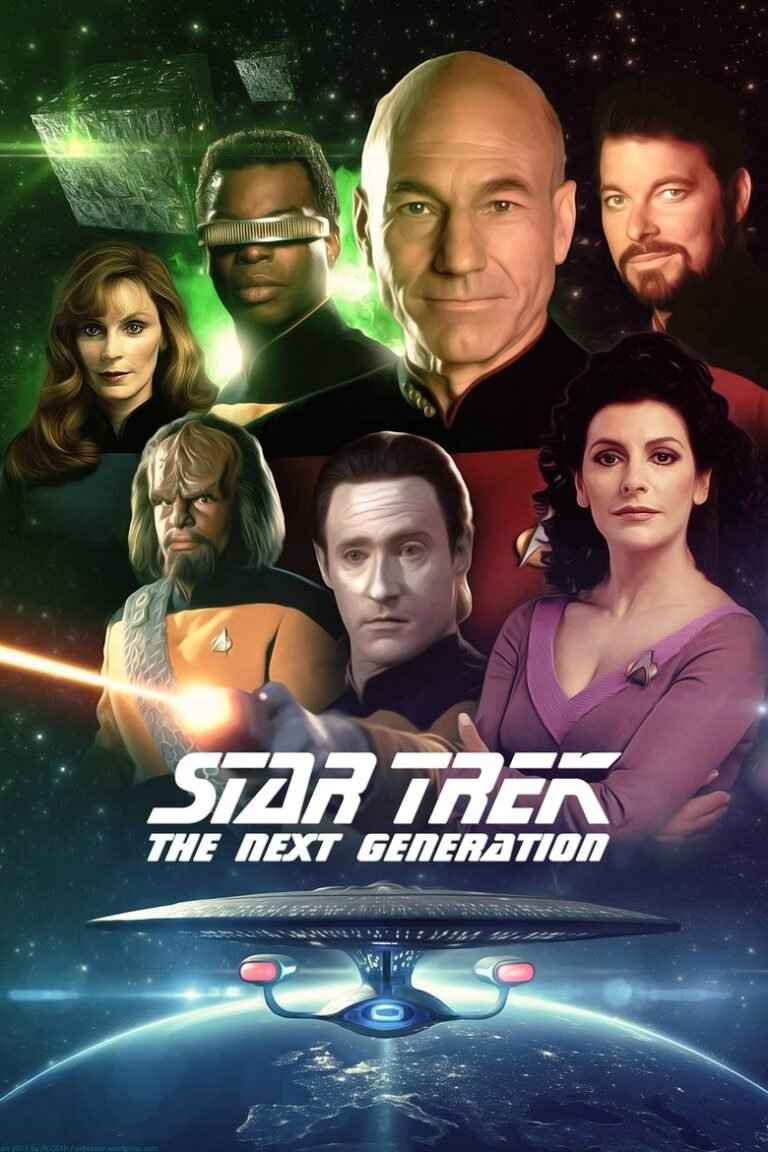
Brent Spiner’s Data was given a remarkable new chapter. Geordi La Forge, Beverly Crusher, Worf, Riker and Troi all returned as people with histories that extended beyond their old assignments.

Credit: TMDB / promotional artwork
Promotional artwork
themoviedb.org
Then came the Enterprise-D.
Seeing that magnificent ship restored and back in action was an extraordinary moment. But the real achievement wasn’t the ship itself. It was what the ship represented.
Home.
After decades of adventures, separations, losses and disappointments, everyone was back where they belonged.
And when the series ended with the crew gathered around a poker table, it was difficult not to think about the final episode of THE NEXT GENERATION, ALL GOOD THINGS.
We’d come full circle.
That was the brilliance of the finale. It didn’t try to convince us that time had stood still. It acknowledged that these characters were older, that their lives had changed, and that their friendships had endured anyway.
For those of us who had followed them since 1987, that meant something.
But even then, Patrick Stewart wasn’t entirely finished with Jean-Luc Picard.
In a 2023 essay for TIME, Stewart revealed that he had been encouraging Paramount to consider another Picard film. He wanted to explore the character further, not simply make another NEXT GENERATION reunion movie.
In early 2024, he spoke enthusiastically about hearing that a script was being written with him in mind.
Nothing was officially greenlit, but there was still reason to hope.
And then there was STAR TREK: LEGACY.
The Adventures We’ll Never See
The conclusion of PICARD opened the door to something that I desperately wanted to see.
Jeri Ryan’s Seven of Nine, now captain of the Enterprise-G, leading a new generation into the future.
STAR TREK: LEGACY was a proposed continuation that could have built on the extraordinary goodwill created by PICARD’s final season while giving the franchise a new direction.
It was an opportunity to do what STAR TREK has always done particularly well: pass the torch.
And Patrick Stewart wanted to be part of it.
In an October 2026 appearance on Brent Spiner and Jonathan Frakes’ DROPPING NAMES podcast, Matalas revealed that Stewart had expressed interest in appearing on the proposed series to give the new Enterprise crew its missions.
Just imagine that.
Captain Seven of Nine receiving her orders from Admiral Jean-Luc Picard, the man whose ideals helped shape the future she would be exploring.
There was something beautifully appropriate about the idea.
LEGACY was never ordered to series, and there’s no guarantee it would have happened even if Stewart were still with us. But knowing he wanted to participate makes the missed opportunity that much more painful.
The possibility of the series itself may still exist in some form. The possibility of seeing Patrick Stewart help guide that next generation does not.
It’s one more adventure we’ll never get to take with him.
Two Great Leaders, One Extraordinary Actor
Of course, Jean-Luc Picard was hardly Patrick Stewart’s only contribution to popular culture.
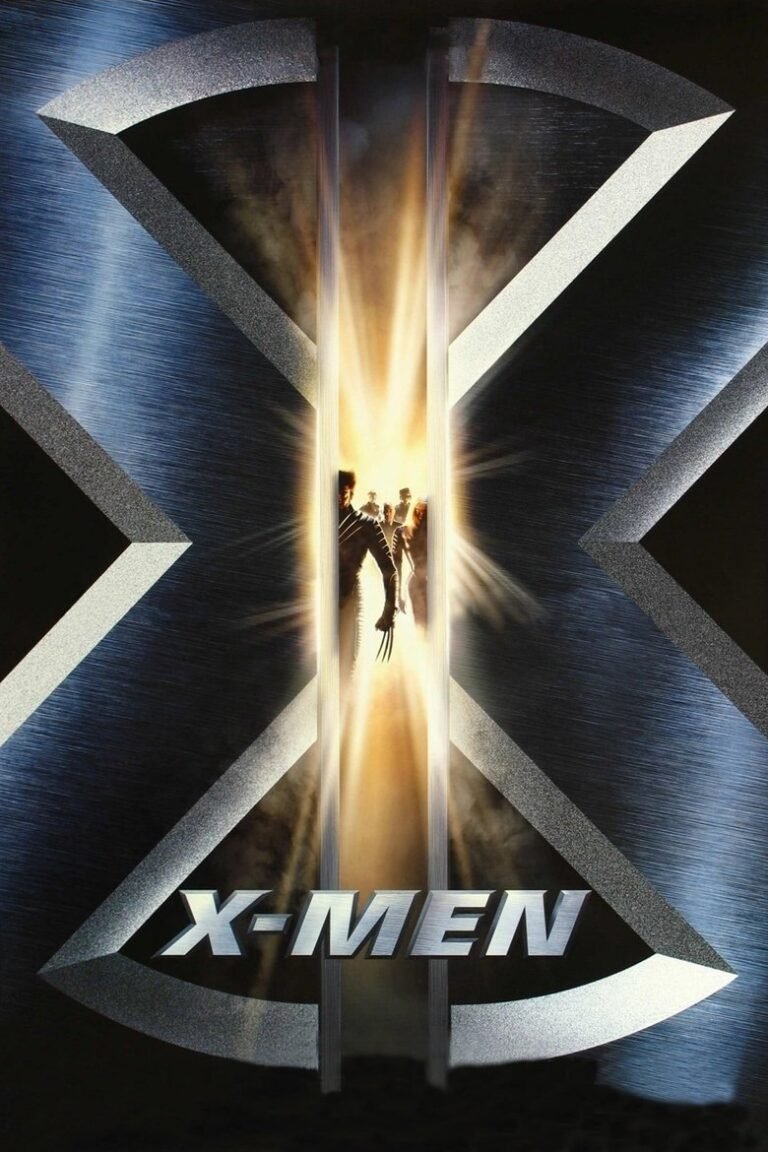
In 2000, Bryan Singer’s X-MEN introduced movie audiences to another extraordinary Stewart character: Professor Charles Xavier.
I’ve followed those movies since the beginning, and I cannot imagine anyone more perfectly suited to the role.
In many ways, Xavier and Picard were two sides of the same coin.

Credit: TMDB / promotional artwork
Promotional artwork
themoviedb.org
Both were leaders. Both were intellectuals. Both believed in understanding rather than hatred, and both were willing to fight for people who couldn’t always fight for themselves.
But neither was infallible.
Professor Xavier’s belief in peaceful coexistence between humans and mutants frequently put him at odds with his oldest friend, Erik Lehnsherr, better known as Magneto.
Stewart and Ian McKellen brought a remarkable depth to that relationship. Their characters disagreed profoundly about the future of mutantkind, yet their affection and respect for one another made the conflict something much more interesting than a conventional battle between good and evil.
And because Stewart and McKellen were themselves accomplished Shakespearean actors and longtime friends, those scenes carried an extraordinary amount of dramatic weight.
The X-MEN films helped redefine what superhero cinema could accomplish. Long before the Marvel Cinematic Universe became an entertainment powerhouse, Stewart was helping demonstrate that comic-book characters could support serious performances and substantial ideas.
His work in LOGAN was particularly devastating, showing us a frail, vulnerable Xavier far removed from the powerful mentor we’d first met.
And now, almost three decades after his first appearance, one more reunion awaits.
Marvel Studios has confirmed Stewart among the returning cast members of AVENGERS: DOOMSDAY, scheduled for December 18, 2026.
It’s expected to be his final screen appearance, bringing Professor Xavier into another major Marvel crossover alongside familiar X-MEN actors, including McKellen.
After all these years of following the X-MEN movies, I should be excited beyond words.
And I am.
But knowing we’ll be watching Patrick Stewart after his death changes everything.
It’s going to be wonderful to see him again. It’s also going to be heartbreaking.
More Than a Uniform or a Wheelchair
For all the attention given to his two most recognizable characters, Stewart’s accomplishments extended far beyond science fiction and superhero movies.
Born in Yorkshire in 1940, he grew up in a working-class household and discovered acting as a young boy. His career eventually took him to the Royal Shakespeare Company, where he established himself as a formidable classical performer long before American audiences knew him as Picard.
He performed Shakespeare, Dickens, Beckett and Pinter, earning acclaim on both sides of the Atlantic. In 2010, Queen Elizabeth II knighted him for his contributions to drama.
And he never confined himself to respectable, serious roles.
This was also the man who gleefully lent his unmistakable voice to Avery Bullock on AMERICAN DAD!, appeared in Mel Brooks’ ROBIN HOOD: MEN IN TIGHTS and seemed perfectly comfortable making fun of his own distinguished reputation.
That’s an important part of his legacy too.
Stewart wasn’t simply an imposing actor with a magnificent voice. He was a remarkably versatile performer who understood that comedy and drama required different skills, and who was willing to embrace both.
There was also a more difficult side to his personal history.
Stewart spoke publicly about witnessing his father’s violence against his mother during his childhood. He later became an advocate for victims of domestic abuse, using his public profile to support organizations including Refuge.
He was a man who understood that real life was often far more complicated than the heroic characters he played.
That makes his artistic legacy all the more impressive.
He could portray moral authority without making it feel self-righteous. He could bring dignity to a character without making him emotionless.
And he could remind us that the strongest person in the room might also be the most compassionate.
The World Gets a Little Grayer
There’s another reason Patrick Stewart’s passing is hitting me particularly hard, and I suspect it’s something many longtime fans will understand.
We’re getting older.
That means the people who helped define our childhoods, our teenage years and our adult lives are getting older too.

Credit: TMDB / promotional artwork
Promotional artwork
themoviedb.org
The actors and performers who once seemed like permanent fixtures in popular culture are leaving us, one by one.
And with each loss, the world seems to get a little grayer.
It’s an uncomfortable realization.
For decades, Patrick Stewart was simply there. There were always old episodes of THE NEXT GENERATION to revisit, another X-MEN movie to anticipate, or some possibility that he might return to one of the characters we loved.
Even after PICARD ended, there was still hope for another movie or a guest appearance in LEGACY.
Now we know those particular opportunities are gone.
The performances remain, of course. Nothing can take away the remarkable body of work Stewart leaves behind.
But there’s a difference between knowing you can revisit an old favorite and knowing you might still see something new.
That’s the part of losing an artist that doesn’t always get discussed.
We aren’t just mourning what we’ve lost. We’re mourning everything that might still have been.
Thank You, Sir Patrick
Patrick Stewart spent much of his career portraying men who believed in a better future.
Jean-Luc Picard believed humanity could overcome its worst instincts and become something extraordinary.
Charles Xavier believed that people who feared and misunderstood one another might someday learn to coexist.
Both characters confronted prejudice, violence, ignorance and the temptation to abandon their principles when things became difficult.
And both were brought to life by an actor who understood how to make those principles feel worth defending.
That’s an extraordinary contribution to popular culture.
It’s also a personal one.
I’ve spent an enormous part of my life watching Patrick Stewart. I’ve admired his performances, followed his characters, celebrated their victories and mourned their losses.
When the Enterprise-D returned in PICARD, I was thrilled. When that final poker game ended, I was satisfied. For the first time in decades, THE NEXT GENERATION had the conclusion it deserved.
And I was still hoping for more.
Perhaps that’s the best measure of what Patrick Stewart accomplished.
After nearly forty years of Jean-Luc Picard, and more than twenty-five years of Charles Xavier, we still weren’t tired of him.
We still wanted to see what he would do next.
We got our goodbye to Captain Picard. We never quite got our goodbye to Patrick Stewart.
So this will have to do.
Thank you, Sir Patrick, for all the wonderful characters, unforgettable performances and extraordinary adventures.
Thank you for helping make STAR TREK what it is, for giving the X-MEN their heart, and for showing generations of viewers that intelligence, dignity and compassion could be every bit as heroic as courage and strength.
And most of all, thank you for giving me a captain I could admire for a lifetime.
You will always be my captain.

What This Is About
Star Trek: The Next Generation
View Title


+2
Star Trek: Picard
View Title

+1
X-Men
View Title


Patrick Stewart
View Person
Community
What Did You Think?
0 comments
No comments yet. Start the conversation.