You Can See Everything review: Did Nathan Fielder get played by Elizabeth Holmes?
You Can See Everything might be one of the greatest documentaries ever made, or one of the biggest disappointments of my moviegoing life. I'm still trying to decide which.
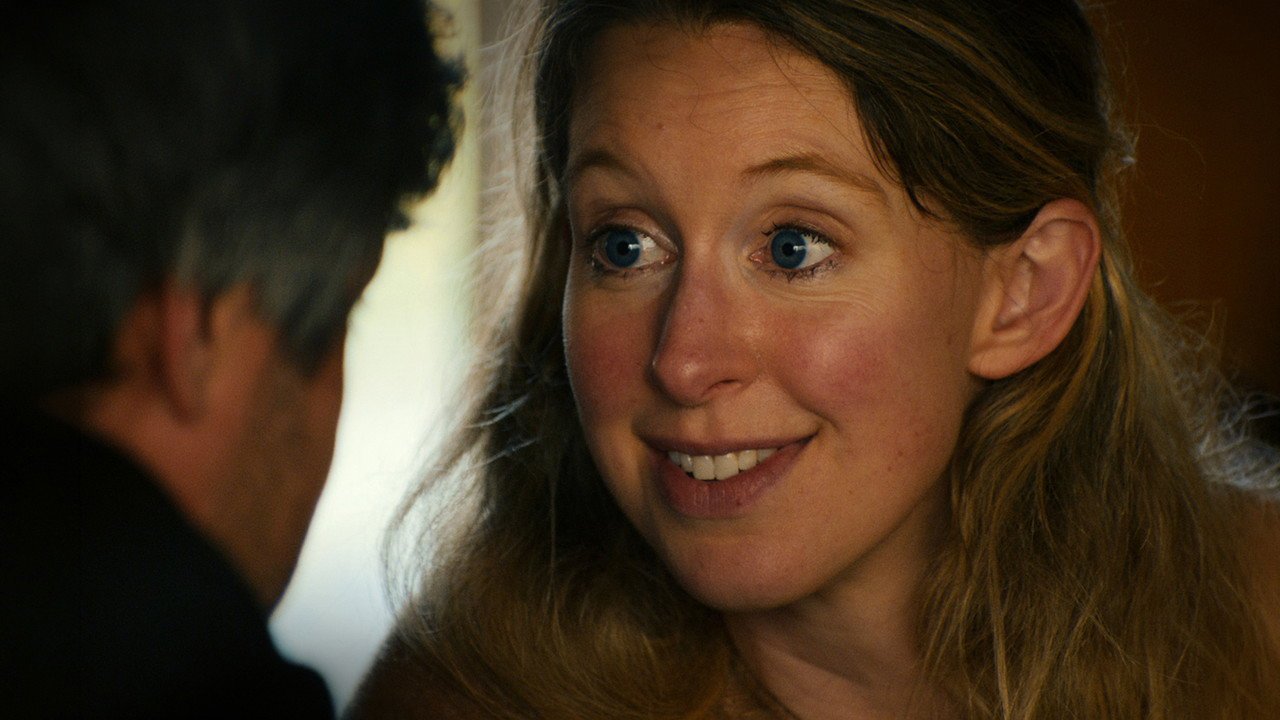
Credit: TMDB / promotional artwork
Promotional artwork
themoviedb.org
SPOILER WARNING: Major plot developments discussed.
KAZOOWATCH RATING: WITHHELD
My family and I are enormous Nathan Fielder fans. We loved the first season of The Rehearsal so much that we went back and watched every episode of Nathan for You. His awkward, cringe-inducing comedy is damn near perfection. There’s something about the way his mind works that makes the weird little AuDHD kid in me feel validated. Like maybe I’m not the only person in the world who thinks this way.
I love Nathan Fielder. But that doesn’t mean I believe he can do no wrong. I made it through about an episode and a half of The Curse before giving up, so my admiration certainly has its limits.
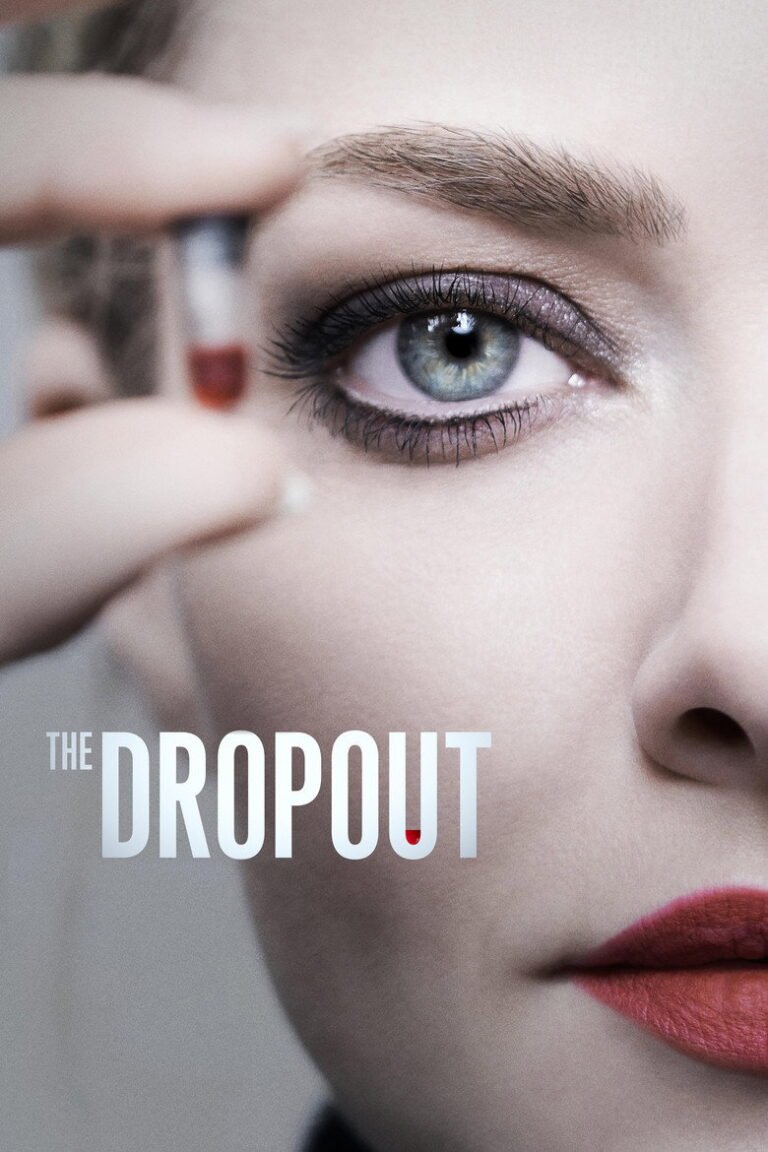
In preparation for You Can See Everything, my wife and I went down the Elizabeth Holmes rabbit hole. We watched Hulu’s The Dropout, starring Amanda Seyfried as the disgraced Theranos founder, and thought it was excellent. In fact, I need to remember to go back to KazooWatch and give that series the HELL YEAH rating it deserves.
That decision is easy. What isn’t easy is trying to review You Can See Everything objectively, because I’m still seething.
The film, co-directed by Fielder and Lance Oppenheim, just delivered the second-largest opening weekend for a documentary in history, behind only Michael Moore’s Fahrenheit 9/11 from 2004. Critics are practically falling over themselves to praise it. And here I am, wondering whether I just watched a masterpiece or an incredibly talented filmmaker get played like a fiddle.
From the beginning, Nathan had me.
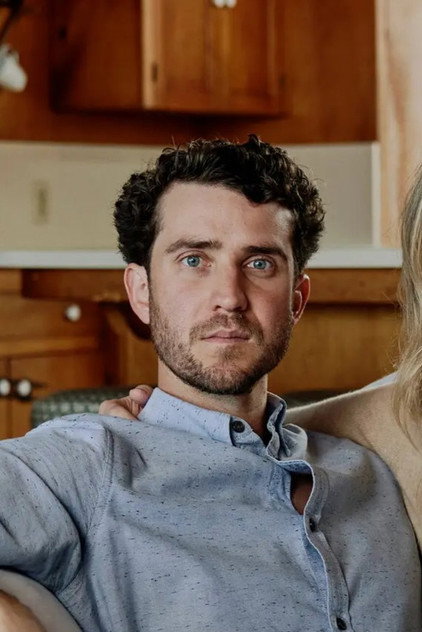
The way he uses silence to make Elizabeth Holmes and her partner, Billy Evans, uncomfortable is absolutely mesmerizing. He lets them talk, lets them stumble, and gives them enough room to accidentally reveal things they probably shouldn’t. It’s classic Fielder, and it’s brilliant.
I was enthralled by the premise. Somehow, Nathan Fielder had found himself with extraordinary access to one of America’s most notorious corporate fraudsters. Elizabeth Holmes was convicted of defrauding Theranos investors in 2022 and sentenced to more than 11 years in federal prison. Now, here she was, inviting cameras into her private life just before going away.
What could possibly go wrong?
Well, quite a bit, apparently.
As the film progresses, the image of this incredible, happenstance documentary begins to crumble. That’s not even their home. They rented it for the documentary. Billy is dictating what can and cannot be discussed, shutting down takes he doesn’t like, and appearing to control practically everything happening around him.
He’s hiding something. Or at least, that’s certainly what we’re being led to believe.
And that’s where this incredible documentary started to fall apart for me.
We’re watching two people who appear willing to manipulate absolutely everything around them, including their own portrayal in the movie we’re watching. Elizabeth Holmes even makes the astonishing claim that she has never told a lie in her life.
Never?
Come on, Elizabeth.
Her explanations of the Theranos technology make even less sense. Apparently, when Holmes told people that her revolutionary blood-testing machine could perform all those medical tests, she meant that it COULD do them, provided the necessary science existed to make them possible.
So essentially, she was selling the concept of a plan.
That’s not how this works! You cannot sell people technology that doesn’t perform as advertised and then insist that everyone else misunderstood what you meant by the word “could.”
Nathan seems to recognize the absurdity of this explanation, eventually showing Holmes the classic Abbott and Costello routine Who’s on First? in an attempt to illustrate how ridiculous their conversations have become.
And she doesn’t get it.

Credit: TMDB / promotional artwork
Promotional artwork
themoviedb.org
She apparently cannot grasp the joke, or at least cannot explain what makes it funny. It’s an extraordinary moment. Is she genuinely that literal? Is she incapable of recognizing the absurdity of her own explanations? Is she pretending not to understand?
I don’t know. But none of those possibilities changes what happened at Theranos.
Yet somewhere along the way, something even stranger starts happening.
It begins to look an awful lot like Nathan Fielder is developing actual feelings for Elizabeth Holmes.
I’m serious.
When the two part ways before she heads to prison, I genuinely thought Nathan was about to try to kiss her. They got THAT close. And suddenly, I’m not just questioning Elizabeth Holmes anymore. I’m questioning Nathan Fielder.
Did he fall in love with this woman? Did he become so emotionally invested in her story that he started buying into her narrative? Did the possibility that she was controlled by men like former Theranos executive Sunny Balwani and now Billy Evans somehow convince him that she might actually be innocent?
Because that’s the direction this film seems dangerously close to taking.
And here’s my problem with that.
Billy Evans can be manipulative, controlling, and dishonest without Elizabeth Holmes being innocent of anything. Both things can be true.
Holmes may have experienced manipulation in her relationships. She may genuinely believe her own explanations. She may be a complicated person who deserves some degree of human empathy.
But none of that erases what she did.
We’re talking about a woman convicted of defrauding investors through a company that claimed to have revolutionary medical technology it could not deliver as promised. Her insistence that everyone else simply misunderstood her intentions does not magically make those intentions honest.
Yet the more the documentary progresses, the less certain I become about what Nathan Fielder is trying to tell me.
Is he allowing the overwhelming weirdness of this situation to speak for itself, trusting his audience to recognize the deception? Is he deliberately showing us how easily even a brilliant observer can become emotionally entangled with someone who manipulates reality?
Or did he actually get sucked into the story and lose his objectivity?
That’s an enormous distinction.
To his credit, Fielder fights for the integrity of his film when he discovers Billy’s financial interest in the production, eventually getting him to relinquish his claim to a percentage of the profits. That matters. It shows a filmmaker willing to challenge the people controlling his access.
But then the movie ends without providing anything resembling a satisfying resolution to the questions it has spent nearly three hours raising.
So what, Nathan? Decide for myself?
I already HAVE decided that Elizabeth Holmes was guilty of defrauding investors. A federal jury did, too.
The question I’m struggling with is whether you understand how easily the ambiguity of this film could be used to suggest otherwise.
And that’s what makes me angry.
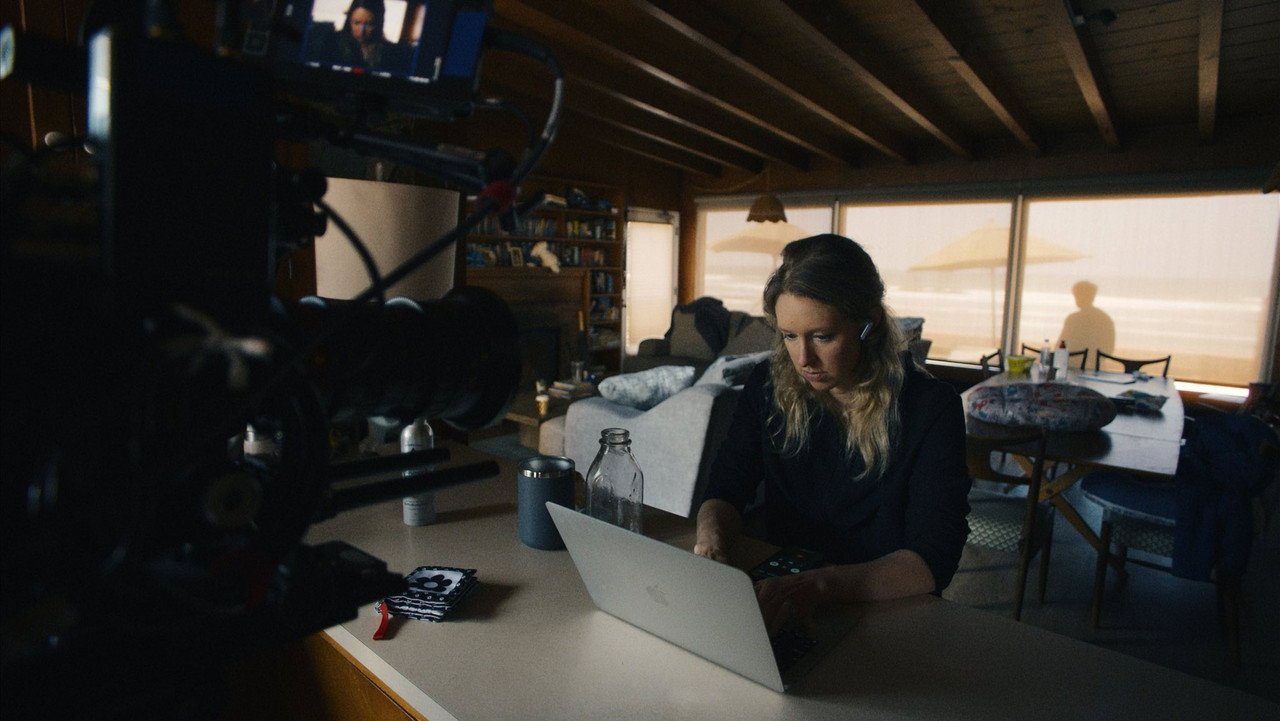
Credit: TMDB / promotional artwork
Promotional artwork
themoviedb.org
Nathan Fielder is a master of subtlety. His comedy lives in the uncomfortable spaces between what people say, what they mean, and what they actually believe. That’s precisely why I love his work.
But the masses are not necessarily masters of subtlety. Not everyone recognizes satire, and not everyone notices when a filmmaker is asking them to question what they’re seeing rather than accept it.
Sometimes people take the images in front of them at face value.
And when your subject is Elizabeth Holmes, ambiguity can become a very dangerous thing.
I worry that this film, whether intentionally or not, gives one of the most notorious figures in recent corporate fraud a fresh opportunity to reframe herself as a misunderstood victim.
Perhaps that’s an unfair criticism. Perhaps Nathan is several steps ahead of me, and the fact that I’m sitting here furious, confused, and questioning everything is exactly what he intended.
Maybe the joke is on me.
Then again, there’s another possibility. Maybe halfway through making this movie, Fielder realized he didn’t have the documentary he thought he was making and decided to construct a different story from the pieces he had.
And honestly, that would be pretty Nathan Fielder, too.
I will absolutely give credit where credit is due. Bringing Amanda Seyfried into the documentary to reenact Elizabeth Holmes is an inspired decision, and watching her become part of Nathan’s increasingly bizarre investigation is fascinating. It’s the kind of elaborate, reality-bending experiment that made The Rehearsal so remarkable in the first place.
Those sequences alone made the film worth watching, even when I was becoming increasingly frustrated by the larger story.
Maybe that’s the brilliance here. Maybe this isn’t really a documentary about Elizabeth Holmes at all. Maybe it’s about the impossibility of separating truth from performance when absolutely everyone involved has something to gain.
Including the filmmaker.
That’s a fascinating idea. It might even be a brilliant one.
But I keep returning to the same uncomfortable question: Is Fielder exposing Elizabeth Holmes’s manipulation, or has he accidentally become part of it?
And if the answer is supposed to be that we can never know, I’m not entirely convinced that’s good enough.
So, for the first time since I started reviewing movies, I’m not giving this one a rating. Not yet.
I need to sit with it. I need to digest what I saw, reconsider what Nathan might have been trying to accomplish, and decide whether my frustration is evidence of a failed documentary or proof of an extraordinarily successful one.
Because right now, this is either one of the best documentaries I’ve ever seen, or an incredibly elaborate waste of three hours.
And somehow, I can’t rule out the possibility that it’s both.
I’m hoping for brilliance, Nathan. I really am.
Because I want to see more of the best of you.
RATING: PENDING. I NEED TO THINK ABOUT THIS ONE.
References
Sources & References
13
Links cited, consulted, or used as background for this article. Inclusion does not imply independent verification of every claim.
-
Fortune
2026-10-19 -
U.S. Department of Justice
Northern District of California | Elizabeth Holmes Sentenced To More Than 11 Years For Defrauding Theranos Investors Of Hundreds Of Millions | United States Department of Justice
2022-11-18 -
Los Angeles Times
2026-10-16 -
reuters.com
Elizabeth Holmes sentenced to more than 11 years in prison for Theranos fraud | Reuters
November 19, 2022 -
history.com
Elizabeth Holmes sentenced for fraud | November 18, 2022 | HISTORY
4 days ago -
aetv.com
Where Is Elizabeth Holmes Now? | A&E
3 days ago -
en.wikipedia.org
Elizabeth Holmes – Wikipedia
11 hours ago -
lukincenter.com
Signs of Manipulative Behavior | Lukin Center for Psychotherapy
August 13, 2026 -
reddit.com
r/relationship_advice on Reddit: My (32f) partner (37m) says I “don’t let him talk,” but he talks in circles for so long that I can’t even respond
April 9, 2026 -
tvtropes.org
Break Them by Talking – TV Tropes
January 5, 2012 -
tvtropes.org
We Have Ways of Making You Talk – TV Tropes
November 21, 2025 -
reddit.com
r/StrangerThings on Reddit: [SPOILERS] Something Billy did that stuck out to me this season
July 10, 2019 -
time.com
Breaking Down What Happens to Billy in Stranger Things Season 3
July 4, 2019

What This Is About


Community
What Did You Think?
0 comments
No comments yet. Start the conversation.